

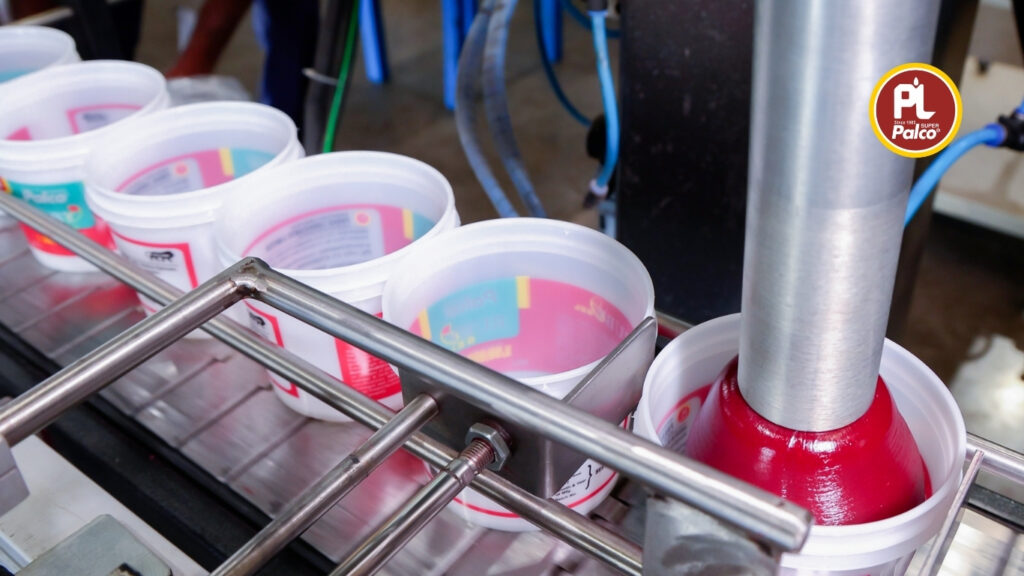
India’s grease industry is evolving with better products, growing demand, and solutions that keep machines running smoothly across industries.
India’s grease industry stands at a defining moment.
For years, greases have quietly supported the backbone of industrial and automotive growth across sectors ranging from manufacturing and mining to transportation, construction, agriculture, steel, marine, railways, and power generation. As part of industrial lubricants and high-performance grease solutions, they play a critical role in ensuring operational reliability. Despite their critical importance, grease technologies have often remained under-discussed compared to other lubricant categories.
That dynamic is now changing rapidly.
As machinery evolves, operating conditions intensify, and industries demand greater efficiency with lower downtime, the role of advanced lubrication systems has become significantly more strategic than ever before. High-performance industrial grease for heavy-duty machinery is now critical in ensuring stability under extreme operating conditions.
In many modern industrial environments, grease is no longer viewed merely as a maintenance consumable. It has become an engineered performance component directly influencing equipment longevity, energy efficiency, operational continuity, and cost optimization.
This transformation brings an important question to the forefront:
Is the Indian grease industry prepared for the next generation of industrial demands?
The answer to that question will largely depend on how seriously the industry embraces innovation and how effectively it nurtures the next generation of technical innovators capable of driving that change.
India’s Grease Industry Growth and Lubrication Requirements
India’s industrial ecosystem is expanding at an unprecedented pace. Large-scale infrastructure projects, rapid manufacturing growth, mining expansion, increasing freight movement, modernisation of industrial equipment, and the emergence of advanced mobility technologies are collectively reshaping lubrication requirements across the country.
Machines today are expected to operate under:
- Higher temperatures
- Heavier loads
- Extended operational cycles
- Greater contamination exposure
- More demanding environmental conditions
- Reduced maintenance intervals
Simultaneously, industries are under constant pressure to improve operational efficiency while lowering maintenance costs and minimizing downtime.
Under such conditions, traditional lubrication approaches are increasingly becoming insufficient.
Conventional grease formulations, including multipurpose lithium grease for industrial applications, that once served standard industrial applications effectively may no longer deliver the level of performance modern systems demand. Today’s machinery requires lubrication solutions capable of maintaining stability under severe thermal stress, resisting oxidation, handling high-speed operations, preventing water washout, protecting against corrosion, and ensuring reliable performance across highly variable operating environments.
This shift is transforming grease manufacturing from a commodity-driven business into a technology-driven industry.
And that transition carries enormous implications for manufacturers across India.
The Industry Can No Longer Compete Only on Volume.
Historically, significant portions of the grease market operated on supply capability, pricing competitiveness, and broad-spectrum applications. While those factors remain commercially relevant, they are no longer sufficient to establish long-term leadership in a rapidly evolving industrial environment.
The future belongs to companies capable of delivering application-specific, performance-engineered solutions.
Industries today increasingly seek:
- Extended lubrication intervals
- Better equipment protection
- Lower maintenance frequency
- Improved energy efficiency
- Compatibility with automated lubrication systems
- Greater thermal and mechanical stability
- Reduced operational failures
- Longer component life
Achieving these outcomes requires far more than manufacturing scale.
It requires technical depth.
The modern grease industry now demands expertise in tribology, additive chemistry, thermal engineering, metallurgy, rheology, mechanical behavior, and application analysis. Manufacturers must understand not only how grease is produced, but also how it behaves inside real-world operating systems under continuously changing conditions.
This is where innovation becomes strategically critical.
Within India’s grease industry, innovation is becoming a defining competitive factor for long-term growth.
Why India’s Grease Industry Needs an Innovation Ecosystem
One of the most important realities often overlooked in lubrication discussions is that Indian operating environments are fundamentally different from many global markets.
Indian industries routinely operate under:
- Extreme summer temperatures
- Heavy dust exposure
- Humidity fluctuations
- Overloaded operating conditions
- Irregular maintenance schedules
- Variable equipment quality
- Mixed fleet machinery usage
- Challenging road and industrial environments
Products developed exclusively for ideal laboratory conditions or standardized international environments do not always deliver optimal results within these realities.
As a result, India cannot depend solely on adapting imported formulations or replicating global product strategies.
The country increasingly requires indigenous innovation tailored specifically to Indian operational demands.
This creates a significant opportunity for the domestic grease industry.
Manufacturers who invest in understanding Indian applications deeply and engineer products around actual field conditions will shape the next phase of industrial lubrication leadership in the country.
The focus must gradually shift from simply manufacturing lubricants to engineering performance solutions.
The Rise of Next-Generation Technologies in India’s Grease Industry
Globally, the grease industry is already undergoing major technological evolution.
Advanced sectors are increasingly adopting:
- Lithium complex greases
- Calcium sulfonate technologies
- Polyurea-based systems
- Synthetic and semi-synthetic formulations
- Long-life industrial greases
- High-speed bearing greases
- Specialty greases for electric vehicles
- Environmentally conscious lubrication systems
- Food-grade and pharmaceutical-grade lubricants
- Smart lubrication monitoring technologies
Additionally, developments in nano-additives, advanced tribology, and precision lubrication systems are beginning to reshape how industrial reliability is managed across modern facilities.
India is well-positioned to participate meaningfully in this transformation.
The country possesses strong manufacturing capability, technical talent, a rapidly expanding industrial base, and increasing global relevance within supply chains. However, capitalizing on this opportunity requires long-term investment in research, testing infrastructure, technical manpower, and product development capabilities.
More importantly, it requires a cultural shift toward innovation-driven manufacturing.
India’s Grease Industry Needs Innovators, Not Just Manufacturers
Perhaps the greatest strategic necessity facing the Indian grease industry today is the development of innovators capable of leading technical transformation.
Innovation does not emerge from machinery alone.
It emerges from people.
The industry requires professionals who:
- Understand both chemistry and industrial applications
- Bridge technical development with field performance realities
- Analyze failures scientifically
- Think beyond conventional formulations
- Understand evolving machinery technologies
- Recognize global lubrication trends
- Solve problems specific to Indian operating environments
These innovators will play a critical role in defining the future competitiveness of Indian lubrication manufacturing.
The next generation of industry leadership must therefore invest heavily in:
- Technical education
- R&D culture
- Application engineering
- Testing and validation systems
- Field performance analysis
- Continuous product improvement
- Cross-functional technical collaboration
Without this ecosystem, long-term technological advancement becomes difficult to sustain.
Leadership Must Think Beyond Short-Term Commercial Cycles
Innovation within the grease industry cannot operate on short-term thinking alone.
True technical development requires patience, experimentation, investment, and strategic consistency. Some of the most important advancements in lubrication technologies emerge only after years of testing, refinement, and field validation.
This requires leadership teams willing to support innovation even when immediate commercial returns are not instantly visible.
As someone closely associated with multiple aspects of operations, including technical understanding, production realities, market interactions, and customer expectations, one observation becomes increasingly evident:
Industrial customers today are becoming significantly more performance-conscious.
End users are evaluating:
- Product consistency
- Technical support capability
- Reliability under stress
- Equipment protection
- Operational efficiency
- Long-term value creation
Price remains important, but performance credibility is becoming even more critical.
This is ultimately beneficial for the industry because it encourages higher technical standards and rewards companies focused on engineering excellence rather than short-term volume strategies.
At Paras Lubricants Limited, this evolution is viewed as an important direction for the future of the lubrication industry. The companies that continuously invest in technical advancement, application understanding, and product innovation will ultimately define the next chapter of industrial lubrication growth in India.
Future of India’s Grease Industry Will Belong to Technology-Led Manufacturers
The Indian grease industry has the potential to emerge as a globally respected center for advanced lubrication technologies over the coming decade.
However, achieving that position will require the industry to move beyond conventional manufacturing models and embrace a more innovation-oriented future.
That future must be built upon:
- Stronger technical ecosystems
- Indigenous product development
- Application-focused engineering
- Advanced testing infrastructure
- Skilled technical talent
- Continuous R&D investment
- Collaboration between industry and institutions
- Long-term strategic vision
Most importantly, it must be built by innovators willing to challenge existing limitations and redefine what Indian lubrication technology can achieve on a global stage.
The next phase of growth in the Indian grease industry will not be determined solely by production volumes or market expansion.
It will be determined by the industry’s willingness to innovate before disruption forces change.
Because in modern industrial ecosystems, lubrication is no longer just about reducing friction. It is about enabling reliability, efficiency, sustainability, and industrial progress itself.