
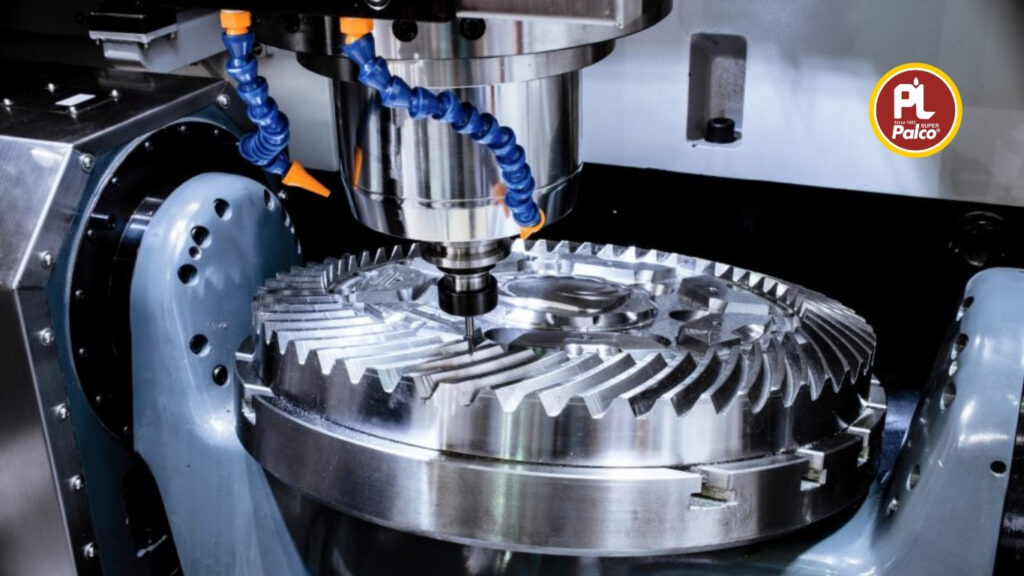
Get better machining results with minimum quantity lubrication, reducing fluid use, improving tool life, and supporting cleaner, efficient operations.
The manufacturing industry is undergoing a significant transformation. As environmental regulations become stricter, operational costs continue to rise, and industries seek greater efficiency, traditional machining practices are being challenged like never before. Among the many innovations shaping the future of metalworking, Minimum Quantity Lubrication (MQL) has emerged as one of the most promising and sustainable technologies.
For decades, flood cooling systems have been the standard approach in machining operations. Large volumes of metalworking fluids were continuously supplied to cutting zones to reduce friction, dissipate heat, and improve tool life. While effective, these systems bring considerable challenges, including high fluid consumption, disposal costs, workplace contamination, maintenance requirements, and environmental concerns.
Today, manufacturers across automotive, aerospace, engineering, precision machining, and component manufacturing sectors are exploring smarter alternatives. Minimum Quantity Lubrication stands at the forefront of this evolution.
Understanding Minimum Quantity Lubrication
Minimum Quantity Lubrication is a machining technique in which a very small amount of specially formulated lubricant is delivered directly to the cutting zone in the form of a fine aerosol or mist. Unlike conventional flood cooling systems that may use several liters of fluid per minute, MQL systems typically consume only a few milliliters of lubricant per hour.
The principle behind MQL is simple yet highly effective. Rather than flooding the machining area with coolant, the lubricant is precisely targeted to where it is needed most, the interface between the cutting tool and the workpiece. This creates an efficient lubricating film that minimizes friction and reduces heat generation at its source.
The result is improved machining performance with dramatically lower fluid consumption.
Why the Industry is Moving Toward MQL
The growing adoption of MQL is not merely a trend; it reflects the changing priorities of modern manufacturing.
Manufacturers are increasingly focused on reducing operational costs, improving workplace safety, enhancing sustainability initiatives, and complying with environmental regulations. Traditional metalworking fluids often require extensive filtration systems, fluid management programs, waste treatment processes, and regular replacement schedules.
MQL significantly simplifies these challenges.
By reducing lubricant consumption by up to 95–99% compared to conventional flood cooling systems, manufacturers can substantially lower their overall fluid-related expenses. Equally important, the reduction in waste generation supports corporate sustainability goals and environmental compliance requirements.
In an era where responsible manufacturing has become a competitive advantage, MQL provides a practical pathway toward greener operations without sacrificing productivity.
Performance Benefits Beyond Sustainability
One common misconception is that sustainable solutions require performance compromises. In reality, MQL often delivers operational advantages that extend far beyond environmental benefits.
Enhanced Tool Life
Friction is one of the primary causes of tool wear. MQL lubricants are specifically engineered to create a strong lubricating barrier between the cutting tool and the workpiece.
By minimizing friction at the cutting interface, tool wear is reduced significantly, often resulting in longer tool life and lower tooling costs.
Improved Surface Finish
Consistent lubrication contributes to smoother cutting action and reduced material adhesion. This frequently results in improved surface quality, tighter dimensional control, and reduced need for secondary finishing operations.
For industries where precision and component quality are critical, this represents a substantial advantage.
Cleaner Components
Since MQL uses minimal fluid volumes, machined parts exit the process with significantly less residual lubricant. This reduces cleaning requirements and can streamline downstream operations such as assembly, coating, welding, or inspection.
Reduced Machine Maintenance
Traditional flood coolant systems require pumps, tanks, filtration units, and regular cleaning procedures. These systems can become breeding grounds for bacterial growth and contamination over time.
MQL systems simplify machine maintenance by eliminating many of these fluid management challenges, leading to reduced downtime and improved equipment reliability.
Environmental Impact and Sustainability
Sustainability is no longer an optional consideration, it is becoming a fundamental business requirement.
Governments worldwide are implementing stricter regulations regarding industrial emissions, waste disposal, and environmental responsibility. Simultaneously, customers increasingly prefer suppliers who demonstrate genuine commitment to sustainable manufacturing practices.
Minimum Quantity Lubrication directly supports these objectives.
The reduced consumption of lubricants translates into lower resource utilization. Waste generation decreases substantially, while the environmental burden associated with transportation, storage, treatment, and disposal of fluids is minimized.
Moreover, operators benefit from a cleaner working environment with reduced exposure to coolant mist and fluid-related contaminants. Improved workplace conditions contribute to employee well-being and reinforce a company’s commitment to responsible operations.
For organizations pursuing ESG (Environmental, Social, and Governance) initiatives, MQL aligns naturally with long-term sustainability strategies.
The Importance of Specialized MQL Fluids
The success of any MQL system depends heavily on the quality and formulation of the lubricant being used.
Unlike conventional metalworking fluids, MQL lubricants must deliver exceptional lubricity in extremely small quantities. They must atomize effectively, maintain thermal stability, protect tooling, and provide consistent performance across varying machining conditions.
Modern MQL fluids are designed using advanced base stocks and additive technologies that ensure optimal lubrication even under demanding cutting operations.
Choosing the right MQL fluid requires a thorough understanding of machining parameters, workpiece materials, tooling configurations, and production objectives. This is where technical expertise becomes critical.
A properly selected MQL fluid can significantly enhance productivity, while an unsuitable product may limit the benefits of the technology.
Applications Across Industries
The versatility of MQL has contributed significantly to its growing adoption.
Today, MQL is successfully used in:
- Automotive component manufacturing
- Aerospace machining operations
- Aluminum processing
- Steel and stainless steel machining
- Precision engineering
- CNC milling
- Drilling and tapping operations
- Medical device manufacturing
- Electronics component production
Advancements in tooling technology and machine design continue to expand the range of applications where MQL can be implemented effectively.
As manufacturing technologies evolve, the compatibility between high-performance cutting tools and specialized MQL lubricants is creating new opportunities for enhanced efficiency.
Looking Ahead
The future of manufacturing will be defined by innovation, efficiency, and sustainability. Companies that embrace technologies capable of delivering all three will be best positioned for long-term success.
Minimum Quantity Lubrication represents far more than an alternative lubrication method. It is a strategic approach that aligns operational excellence with environmental responsibility.
As industries continue to seek smarter manufacturing solutions, MQL is expected to play an increasingly important role in machining operations worldwide. The combination of reduced fluid consumption, lower operational costs, enhanced tool life, cleaner production environments, and improved sustainability credentials makes it one of the most compelling advancements in modern metalworking.
At Palco Lubricants, we believe that the future of industrial lubrication lies in solutions that create measurable value for both manufacturers and the environment. Through continuous innovation, technical expertise, and a commitment to sustainable performance, we are helping industries transition toward the next generation of metalworking technologies.
Minimum Quantity Lubrication is not simply the future of metalworking fluids; it is the future of responsible manufacturing itself.