
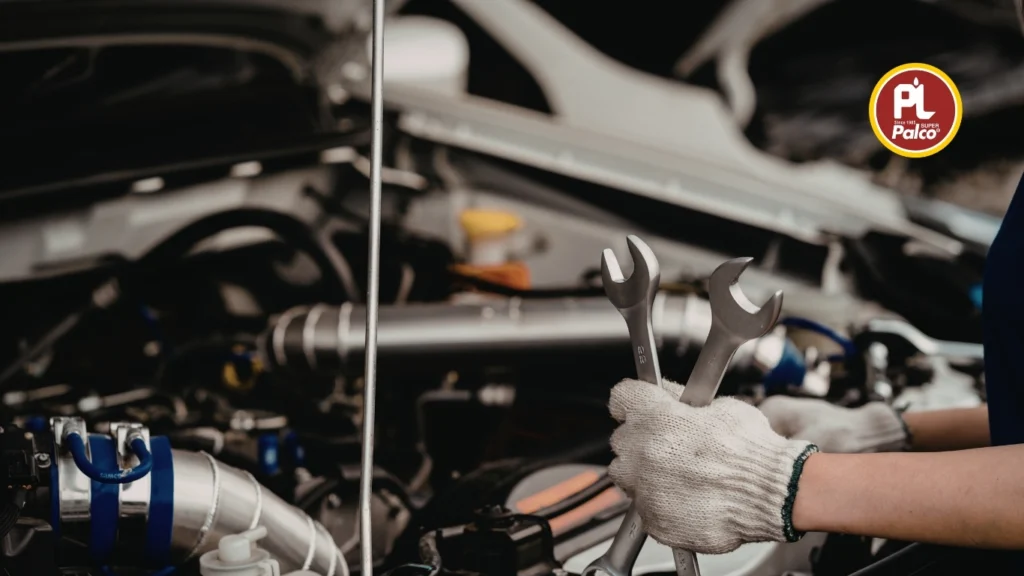
The right lubrication makes a difference. Learn how to choose the best solution for reliable performance and longer equipment life.
Why One Solution Rarely Fits All
Lubrication requirements are often treated as standardized, with a specification selected and a product applied, expecting consistent performance. A specification is selected, a product is applied, and the expectation is straightforward: consistent performance.
In reality, lubrication is far more dynamic.
The effectiveness of any lubricant is not defined solely by its grade or category, but by how well it aligns with the operating conditions in which it is used. Load variations, temperature extremes, environmental exposure, and usage patterns all influence performance outcomes in ways that are often underestimated.
Understanding these variables is not just a technical exercise. It is fundamental to ensuring reliability, efficiency, and long-term equipment health.
Lubrication Requirements Under Load and Mechanical Stress
One of the most critical factors in lubrication is load.
Under low-load conditions, the primary function of a lubricant is to reduce friction and enable smooth motion. However, as load increases, the demands on the lubricant change significantly. The fluid film must withstand higher pressures, maintain separation between surfaces, and resist breakdown under stress.
In high-load environments, such as heavy-duty engines, industrial gear systems, or load-bearing components, the lubricant must provide enhanced film strength and anti-wear protection. Failure to match the lubricant to these conditions can lead to accelerated wear, surface fatigue, and eventual component failure.
Temperature and Its Impact on Lubrication Requirements
Temperature plays an equally decisive role.
At elevated temperatures, lubricants are exposed to oxidation, thermal degradation, and viscosity loss. In such conditions, maintaining stability becomes critical to prevent deposit formation and performance decline.
Conversely, in low-temperature environments, flow characteristics become a concern. Poor fluidity can restrict movement during start-up, leading to increased friction and delayed lubrication of critical components.
The ability of a lubricant to perform across a temperature range, maintaining stability at high temperatures while remaining fluid at low temperatures, is a key determinant of its effectiveness in real-world applications.
Environmental Conditions Affecting Lubrication Requirements
Operating environments introduce another layer of complexity.
Exposure to moisture, dust, chemicals, or contaminants can significantly impact lubricant performance. In industrial settings, for example, ingress of water or particulate matter can degrade lubrication quality, reduce efficiency, and increase the risk of corrosion.
Similarly, in automotive or outdoor applications, fluctuating environmental conditions require lubricants that can maintain performance despite exposure to varying climates and operating environments.
Addressing these challenges requires not just product selection, but a clear understanding of the conditions under which the lubricant will operate.
Operational Cycles and Changing Lubrication Requirements
Beyond physical conditions, usage patterns also influence lubrication requirements.
Continuous operations, intermittent usage, frequent start-stop cycles, and varying duty loads all create different demands. Equipment that runs continuously under stable conditions requires consistency and long-term stability, whereas systems subjected to frequent starts and stops demand rapid lubrication response and protection during boundary conditions.
Ignoring these patterns often leads to mismatched lubrication strategies, resulting in inefficiencies that may not be immediately visible but accumulate over time.
Moving Beyond Generalization
The common thread across all these factors is clear: lubrication cannot be generalized.
A product that performs well in one scenario may not deliver the same results in another, even if the application appears similar on the surface. This is why application-specific understanding is essential, not only in selecting the right lubricant, but in ensuring that it continues to perform as expected throughout its lifecycle.
A Practical Perspective
Over time, the industry has moved from a product-centric view of lubrication to a more application-driven approach. This shift reflects a deeper understanding that performance is closely tied to context.
Manufacturers that operate closely with diverse applications tend to develop a more nuanced perspective, one that considers not just what is being used, but where and how it is being used. This approach allows for better alignment between formulation and function.
It is this kind of application-oriented thinking that continues to shape the way Paras Lubricants Limited (PALCO) approaches lubrication across automotive, industrial, and specialized segments.
Therefore, lubrication is often seen as a supporting function. In reality, it is a defining factor in how efficiently systems operate and how long they last.
Understanding operating conditions, from load and temperature to environment and usage patterns, is essential to making informed decisions. It is not about choosing more products, but about choosing the right one for the right context.
Because in the end, lubrication does not fail due to lack of availability.
It fails when it is applied without understanding the conditions it is meant to serve.