
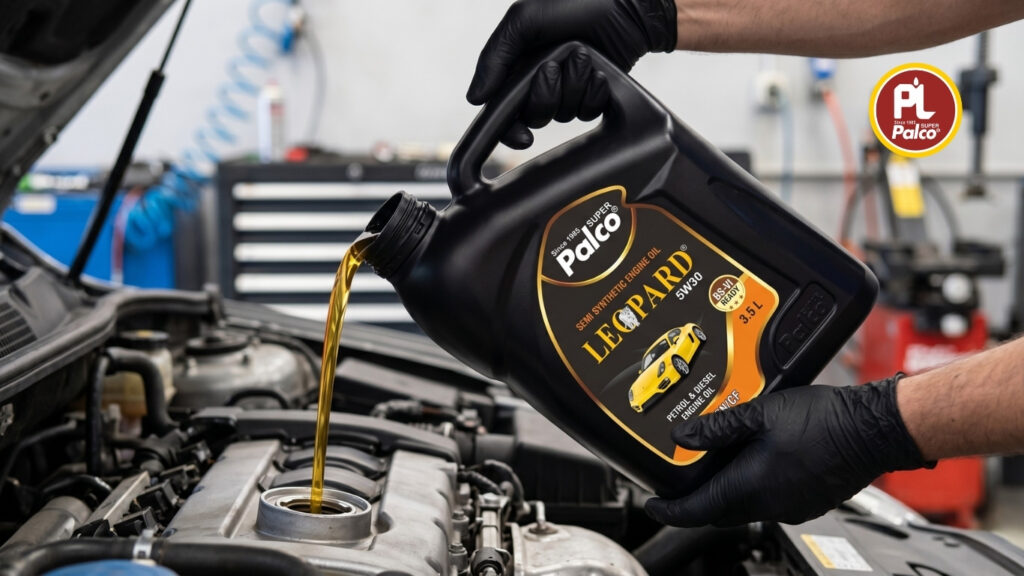
Find out how engine oil performs after 5,000 km and why regular oil checks help keep your engine running smoothly.
There is a certain comfort in routine when it comes to vehicle ownership, especially when drivers assume that Engine Oil After 5000 Km is still performing exactly as it should. The car starts, the drive feels smooth, and everything appears to be working exactly as it should. For most drivers, this is where the thinking stops. If nothing feels wrong, nothing probably is.
But the reality inside the engine tells a very different story.
Engine oil is one of the most dynamic components in any vehicle. It is not static. It is constantly moving, reacting, adapting, and, over time, degrading. By the time a vehicle has covered 5,000 kilometres, Engine Oil After 5000 Km has already undergone a series of chemical and physical changes that directly influence engine performance and longevity.
Understanding this transformation is not just technical curiosity. It is the difference between reactive maintenance and informed ownership.
Engine Oil After 5000 Km Faces Heat and Stress Damage
Modern engines operate under intense thermal conditions. In urban environments, where stop-and-go traffic dominates, engines rarely get the chance to stabilise. Frequent acceleration, idling, and sudden braking create repeated temperature spikes.
Engine oil is designed to withstand these fluctuations, but it is not immune to them.
Over time, sustained exposure to heat begins to alter the oil’s molecular structure. Oxidation sets in. The oil thickens slightly, losing some of its ability to flow freely and maintain a consistent lubricating film. This change is subtle and gradual, which is precisely why it often goes unnoticed.
Yet, this is the stage where the oil starts drifting away from its optimal performance zone.
Contamination: The Silent Accumulation
No engine operates in a perfectly sealed environment. This is one of the biggest reasons why Engine Oil After 5000 Km no longer behaves like fresh lubricant. With every combustion cycle, microscopic contaminants find their way into the oil.
These include:
- Fine dust particles that bypass air filtration systems
- Unburnt fuel residues that dilute the oil
- Metal particles generated from normal engine wear
Individually, these contaminants may seem insignificant. Collectively, over thousands of kilometres, they begin to alter the oil’s composition.
The oil becomes a carrier of impurities. Its ability to lubricate efficiently is compromised, and internal friction within the engine starts to increase. This is not a sudden failure, but a slow shift in operating conditions.
The Depletion of Additives
What many vehicle owners overlook is that engine oil is far more than just base oil. It is a carefully engineered formulation containing additives that perform critical roles.
These additives are responsible for:
- Keeping engine components clean
- Preventing corrosion
- Reducing wear under high load conditions
- Stabilising the oil against oxidation
However, additives are not permanent, and this is where Engine Oil After 5000 Km begins to lose a major part of its protective strength. They are consumed over time as they perform their function.
By the time the oil has seen a few thousand kilometres, a portion of these protective agents has already been used up. The oil may still be present in sufficient quantity, but its protective capability is no longer at its peak.
This is where the real difference between basic and high-performance formulations begins to show.
The Beginning of Sludge Formation
As heat, oxidation, and contamination interact, the early stages of sludge formation begin.
Sludge is not always visible, nor does it form instantly. It develops gradually as degraded oil particles and contaminants combine. Once it starts forming, it can affect oil flow, reduce heat dissipation, and increase resistance within the engine.
In the long term, this can translate into reduced efficiency and increased wear.
Performance Does Not Drop Overnight
One of the reasons this entire process is often ignored is because the engine does not fail dramatically. Instead, performance declines in a way that is almost imperceptible.
There may be a slight increase in engine noise. Fuel efficiency might dip marginally. Acceleration may not feel as crisp as before.
Individually, these changes are easy to dismiss. Together, they indicate that the oil is no longer operating at its intended standard.
Why Oil Quality and Timing Matter More Than You Think
This is where informed decisions make a measurable difference.
Choosing the right engine oil is not just about meeting a specification. It is about ensuring that the oil can sustain its performance over time, under real driving conditions.
This is also where brands that focus on formulation and consistency stand apart. Oils developed with stable base stocks and advanced additive systems are better equipped to handle thermal stress, resist contamination, and maintain performance across longer intervals.
This approach is reflected across modern lubricant portfolios, including those developed by PALCO, where the focus remains on delivering reliable performance in real-world conditions rather than just on paper specifications.
A Perspective Worth Keeping
The engine may not communicate its internal condition in obvious ways. There are no immediate warnings when oil begins to degrade or when additives start to deplete.
But the impact is always there, building gradually with every kilometre.
The real question is not whether engine oil changes after 5,000 kilometres. It inevitably does.
The more relevant question is whether that change is being managed in a way that protects the engine over the long term.
Because in the end, consistent performance is never accidental. It is the result of small, informed decisions made at the right time.