
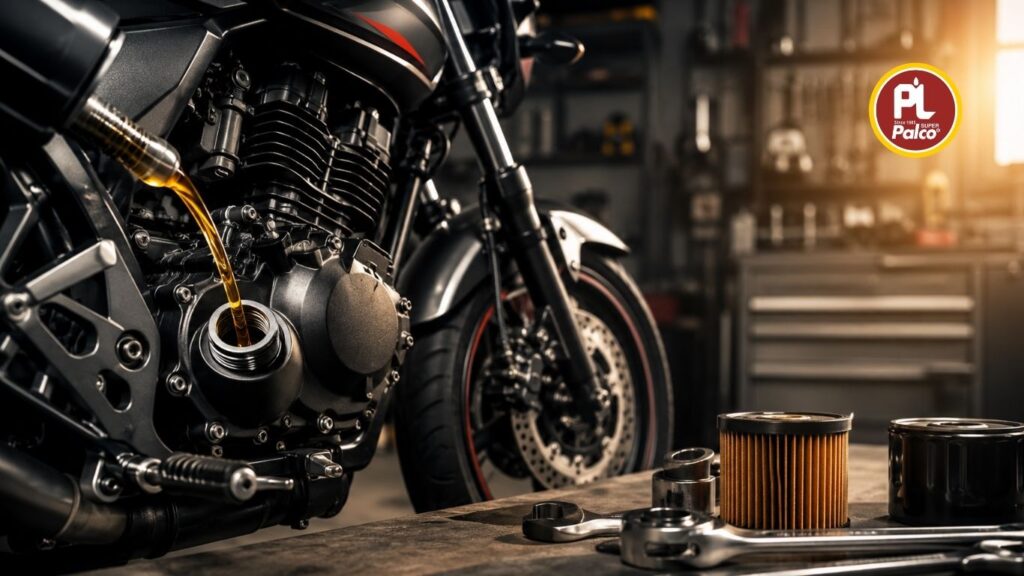
Explore 7 signs your bike engine oil needs replacement. Choose PALCO Solitaire 10W30 for superior engine protection, smooth rides, and lasting performance.
Motorcycle engine oil works quietly inside the engine, but its impact can be felt in every ride. A good engine oil keeps the engine smooth, protects moving parts, helps control temperature, reduces wear, supports gear shifting, and contributes to long-term engine life. When the oil is fresh and suitable for the motorcycle, the bike feels refined, responsive, and comfortable. When the oil becomes old, contaminated, or weak, the difference gradually starts showing in the way the motorcycle sounds, accelerates, shifts, heats, and performs.
Many riders in India wait for the scheduled service date or kilometer reading before changing engine oil. While service intervals are important, they are not the only indicator. A motorcycle can also show warning signs that indicate it’s time for bike engine oil replacement, even before the recommended service interval. These signs are especially important for riders who travel daily in traffic, ride through dusty roads, use their bikes for delivery or field work, or frequently ride in hot weather.
Ignoring old or degraded engine oil can lead to increased friction, poor lubrication, engine heat, rough gear shifting, reduced mileage, and long-term wear. The problem is that engine damage does not always happen suddenly. It often builds up slowly inside the engine. By the time the rider notices a major issue, the oil may have already lost much of its protective ability.
For motorcycles that require 10W30 grade engine oil, using a dependable product like PALCO Solitaire 10W30 can help maintain smooth performance and protection under regular riding conditions. However, even a good-quality engine oil must be changed at the right time. Knowing the early signs of oil deterioration can help riders prevent unnecessary damage and keep their motorcycles running reliably.
Why Engine Oil Condition Matters
Before understanding the warning signs, it is important to understand why engine oil condition matters so much.
Inside a motorcycle engine, many parts move at high speed and under high temperature. These parts need continuous lubrication to avoid direct metal-to-metal contact. Engine oil creates a protective film between moving surfaces, reducing friction and wear.
But engine oil does more than lubrication. It also helps:
Reduce engine heat.
Keep internal components cleaner.
Control deposits and sludge.
Protect against rust and corrosion.
Support smoother gearbox operation.
Maintain overall engine refinement.
Improve riding comfort.
Support fuel-efficient operation.
Over time, engine oil becomes contaminated with carbon particles, combustion by-products, microscopic metal particles, dust-related contaminants, and moisture. Its additives gradually get used up. Its viscosity may change, and its ability to protect the engine reduces.
This is why bike engine oil replacement should not be delayed once these warning signs start appearing.
1. Engine Starts Sounding Rough
One of the most common signs that you need bike engine oil replacement is a rough or louder engine sound.
Every rider becomes familiar with the normal sound of their motorcycle. A healthy engine usually has a consistent tone. When the oil is fresh and circulating properly, it helps cushion moving parts and reduces mechanical noise. But when the oil becomes old, dirty, or weak, its lubricating film starts losing strength. As a result, internal parts may not move as smoothly as before.
You may notice:
A harsher engine sound.
A ticking or tapping noise.
A louder-than-usual engine tone.
More vibration while riding.
A rough feeling during acceleration.
This does not always mean the engine has a serious mechanical fault. In many cases, it can simply mean that the oil is old or not providing enough lubrication.
In Indian conditions, this sign is very common because motorcycles are often used in traffic, heat, and dusty environments. Daily stop-and-go riding exposes oil to repeated heat cycles, which can reduce its effectiveness over time.
If your motorcycle suddenly starts sounding rougher than usual, the first thing you should check is the engine oil level and condition. If the oil is overdue for replacement, changing it at the right time can help restore smoother engine performance.
2. Gear Shifting Becomes Hard
Hard gear shifting is another strong warning sign of old or degraded motorcycle engine oil.
In many motorcycles, engine oil does not only lubricate the engine. It also plays a role in gearbox and clutch operation. This is especially important in bikes where the engine, gearbox, and clutch share the same oil system. When the oil is fresh and suitable, gear changes feel smoother and more controlled. When the oil becomes dirty or loses its viscosity stability, shifting may become harder.
You may experience:
Rough gear changes.
Difficulty shifting between gears.
Trouble finding neutral.
Jerky clutch engagement.
Less smooth acceleration.
Uncomfortable riding in traffic.
This issue becomes more noticeable in city riding because the rider has to shift gears frequently. In heavy traffic, even a small change in gear smoothness can make the ride feel tiring.
Old oil may fail to provide the right balance of lubrication and friction characteristics required for smooth gear and clutch operation. If your motorcycle earlier had smooth gear shifting but now feels stiff or rough, engine oil condition should be checked.
For motorcycles that require 10W30 oil, using a suitable product such as PALCO Solitaire 10W30 and replacing it at the correct interval can help support smoother gear movement and better ride comfort.
3. Bike Pickup Feels Weak
A motorcycle that feels less responsive than usual may also be giving a sign that the engine oil needs replacement.
Pickup depends on several factors, including engine health, fuel quality, air filter condition, spark plug performance, clutch condition, and riding load. However, engine oil also plays an important role. When the oil is old or degraded, internal friction can increase. This makes the engine work harder to produce the same output.
The result can be:
Slow throttle response.
Weak acceleration.
Heavy engine feel.
Reduced smoothness.
Less confidence during overtaking.
Dull performance during city riding.
Many riders describe this as the bike feeling “tight,” “heavy,” or “not free.” In some cases, the motorcycle may still run normally, but it does not feel as sharp or smooth as before.
This happens because old oil cannot reduce friction as effectively as fresh oil. It may also contain contaminants that increase resistance between moving parts. When internal friction rises, the engine loses some of its efficiency.
If your motorcycle was performing well earlier but now feels sluggish, check the oil condition and service history. If the oil change interval is already crossed, replacing the oil may help restore smoother and more responsive performance.
4. Engine Heats Up More Than Usual
Engine heat is one of the most important signs riders should never ignore.
Motorcycle engines naturally generate heat during operation. But engine oil helps manage that heat by reducing friction and carrying heat away from internal components. When the oil is fresh, it supports temperature control and keeps the engine running more comfortably. When the oil becomes old, dirty, or degraded, its ability to handle heat reduces.
You may notice:
More heat near the engine.
Burning smell after riding.
Engine performance dropping after some time.
Discomfort during traffic riding.
Roughness after long rides.
The bike feeling stressed in hot weather.
Indian riding conditions already put motorcycle engines under thermal stress. Long traffic signals, summer heat, slow-moving roads, pillion riding, and dusty environments can all increase engine temperature. If the oil is old, this heat stress becomes worse.
An overheating feeling does not always mean engine oil is the only reason. It may also be related to cooling system issues, low oil level, poor air flow, incorrect tuning, or mechanical faults. But oil condition should always be checked when engine heat feels higher than normal.
Using the correct oil grade and changing it regularly helps the engine manage heat better. For motorcycles that require 10W30, PALCO Solitaire 10W30 is formulated to provide dependable lubrication and protection under regular riding conditions.
5. Oil Looks Dark, Dirty, Thick, or Gritty
One of the simplest ways to understand engine oil health is to check its appearance and feel.
Fresh engine oil usually looks clean and smooth. Over time, it becomes darker as it collects contaminants and combustion by-products. Some darkening is normal because the oil is doing its job of cleaning and carrying away impurities. However, very dark, thick, burnt-smelling, or gritty oil should not be ignored.
Warning signs include:
Oil looking extremely black and dirty.
Oil feeling thick or sticky.
Oil smelling burnt.
Oil containing visible dirt or particles.
Oil level being too low.
Oil appearing unusually thin or watery.
Gritty oil is especially concerning because it may contain hard particles that can increase wear inside the engine. Dirty oil can also contribute to deposit and sludge formation, especially if oil changes are delayed repeatedly.
Riders should develop the habit of checking engine oil level and condition regularly. It only takes a few minutes but can prevent major issues. If the oil appears heavily contaminated or the level is low, it should be inspected and replaced as soon as possible.
6. Mileage Starts Dropping
Mileage is one of the biggest priorities for motorcycle owners in India. Whether the bike is used for office travel, college, delivery work, business visits, or daily commuting, fuel efficiency matters.
When mileage drops, most riders first think about fuel quality, riding style, tyre pressure, or traffic. These are all important factors. But old engine oil can also affect fuel efficiency.
Engine oil affects mileage because it influences internal friction. Fresh oil helps engine components move smoothly. Old oil increases resistance. When friction increases, the engine needs more energy to operate. This can result in higher fuel consumption.
If your motorcycle’s mileage has dropped and other common factors are normal, engine oil may be one of the reasons.
Before blaming the engine, check:
When was the oil last changed?
Is the oil level correct?
Is the oil grade suitable for the bike?
Does the oil look dirty or burnt?
Has the riding pattern changed recently?
A suitable 10W30 oil like PALCO Solitaire 10W30 can help support efficient engine operation when used in motorcycles recommended for this grade. However, it must be changed on time to continue performing effectively.
7. Oil Change Interval Is Already Overdue
Sometimes, the clearest warning sign is not a sound, smell, or performance issue. It is simply the service record.
If your motorcycle has already crossed its recommended oil change interval, the oil should be replaced even if the bike seems to be running fine. Waiting for visible symptoms is not a good maintenance habit.
Engine wear does not always show immediately. Internal damage can develop slowly over time. A motorcycle may continue running even with old oil, but that does not mean the engine is properly protected.
The recommended oil change interval depends on the motorcycle model, oil type, riding conditions, and manufacturer guidelines. Many motorcycles require oil changes within a certain kilometer or time interval. If your bike is used in demanding conditions, the oil may need closer inspection.
Severe riding conditions include:
Heavy city traffic.
Long idling.
Dusty roads.
Short repeated rides.
High summer temperature.
Frequent pillion riding.
High-load usage.
Commercial or delivery use.
If your riding pattern includes these conditions, do not delay oil replacement.
Why Timely Oil Replacement Matters
Bike engine oil replacement is not just about maintaining smoothness. It is about preventing long-term damage.
Timely oil changes help:
Reduce wear on engine parts.
Maintain engine cleanliness.
Control sludge and deposits.
Improve riding comfort.
Support mileage.
Reduce excessive heat.
Maintain smoother gear shifting.
Extend engine life.
Lower long-term maintenance costs.
A motorcycle engine contains many fast-moving components. Without proper lubrication, these parts experience friction and heat. Fresh engine oil helps protect them and allows the engine to operate efficiently.
The cost of regular oil replacement is small compared to the cost of engine repair. This is why timely oil maintenance should be treated as an investment in engine life, not an expense.
Choosing the Right Replacement Oil
During bike engine oil replacement, always use the grade recommended by your motorcycle manufacturer. If your bike requires 10W30, do not switch to a thicker or thinner grade without checking the manual.
A good motorcycle engine oil should offer:
Consistent viscosity.
Strong wear protection.
Thermal stability.
Clean engine performance.
Rust and corrosion protection.
Smooth engine feel.
Reliable daily performance.
PALCO Solitaire 10W30 is formulated for motorcycles that require 10W30 engine oil. It is suitable for everyday riding conditions where smoothness, protection, and consistent lubrication are important.
The right oil is not simply the most expensive oil or the thickest oil. The right oil is the one that matches your motorcycle’s engine requirement.
Why 10W30 Is Relevant for Many Modern Motorcycles
Many modern motorcycles are designed for fuel efficiency, quick lubrication, and smoother operation. For such engines, 10W30 is often recommended because it offers a balanced viscosity profile.
It flows well during start-up and maintains the required protection at operating temperature. This can be useful for daily riders who start and stop their motorcycles multiple times throughout the day.
In city riding, where motorcycles often face frequent gear changes and repeated heat cycles, using the correct grade becomes even more important.
For bikes that require this viscosity, PALCO Solitaire 10W30 supports smooth engine operation and dependable protection when replaced at the right interval.
Maintenance Habits Every Rider Should Follow
To avoid oil-related problems, riders should build a simple maintenance routine.
Check oil level regularly.
Follow the recommended oil change interval.
Use the correct engine oil grade.
Avoid overfilling or underfilling oil.
Replace the oil filter where applicable.
Do not mix different oil grades unnecessarily.
Pay attention to engine sound.
Do not ignore hard gear shifting.
Service the motorcycle on time.
Avoid using poor-quality oil.
These habits are simple, but they are highly effective. A well-maintained motorcycle usually delivers smoother performance, better reliability, and longer engine life.
When Should You Inspect Engine Oil More Frequently?
Some riders should check oil condition more often than others.
You should inspect engine oil more frequently if:
You ride daily in heavy traffic.
You travel through dusty roads.
You often ride in hot weather.
You use the bike for delivery or field work.
You ride with a pillion regularly.
You take frequent short trips.
Your motorcycle is older.
You notice rough engine sound or heat.
Frequent inspection does not mean changing oil unnecessarily. It simply helps you catch problems early.
Final Thoughts Before Replacing Engine Oil
Before bike engine oil replacement, keep these three important things in mind.
First, check the owner’s manual for the recommended grade. Second, choose a reliable oil that matches the required specification. Third, change oil at the correct interval based on both kilometers and riding conditions.
Motorcycle maintenance is not complicated. Most engine problems can be reduced by following basic habits consistently. Timely oil replacement is one of the easiest and most effective habits a rider can develop.
Conclusion
Timely bike engine oil replacement helps improve engine performance, reduce wear, and extend engine life. Rough engine sound, hard gear shifting, weak pickup, unusual heating, dirty oil, reduced mileage, and overdue service intervals are all signs that engine oil may need immediate replacement.
Ignoring these signs can lead to increased wear, poor performance, higher maintenance costs, and reduced engine life. Changing oil at the right time is far less expensive than repairing engine damage later.
For motorcycles requiring 10W30 grade oil, PALCO Solitaire 10W30 offers dependable lubrication and protection for daily riding when used as recommended. Use the correct oil, maintain proper intervals, and pay attention to your motorcycle’s warning signs. In return, your bike will deliver smoother performance, better comfort, and stronger long-term reliability.
Frequently Asked Questions
What happens if I do not change bike engine oil?
If engine oil is not changed on time, it can lose its protective ability. This may lead to increased friction, engine wear, overheating, sludge formation, rough gear shifting, poor mileage, and reduced engine performance.
How do I know my engine oil is bad?
Common signs include rough engine sound, hard gear shifting, weak pickup, increased heating, dark or dirty oil, reduced mileage, and an overdue service interval.
Can old engine oil affect pickup?
Yes. Old or degraded oil can increase internal friction, making the bike feel heavy, sluggish, or less responsive during acceleration.
Can old oil reduce bike mileage?
Yes. Old oil can increase friction inside the engine, which may reduce fuel efficiency over time. Mileage also depends on tyre pressure, riding style, air filter, spark plug, and traffic conditions.
Is dark engine oil always bad?
Not always. Engine oil naturally darkens as it works. However, oil that looks very dirty, thick, burnt, gritty, or contaminated should be inspected and replaced if necessary.
Is PALCO Solitaire 10W30 good for motorcycles?
Yes. PALCO Solitaire 10W30 is suitable for motorcycles that require 10W30 grade engine oil. It supports smooth engine operation, lubrication, and protection under regular riding conditions.
Should I change engine oil before the service interval?
If the bike is used in severe conditions such as heavy traffic, dusty roads, high heat, delivery use, or frequent short rides, oil may need closer inspection. Always follow the manufacturer’s recommendation and replace oil earlier if symptoms appear.
Can I use PALCO Solitaire 10W30 in any bike?
Use PALCO Solitaire 10W30 only in motorcycles where 10W30 grade engine oil is recommended or allowed by the manufacturer.