
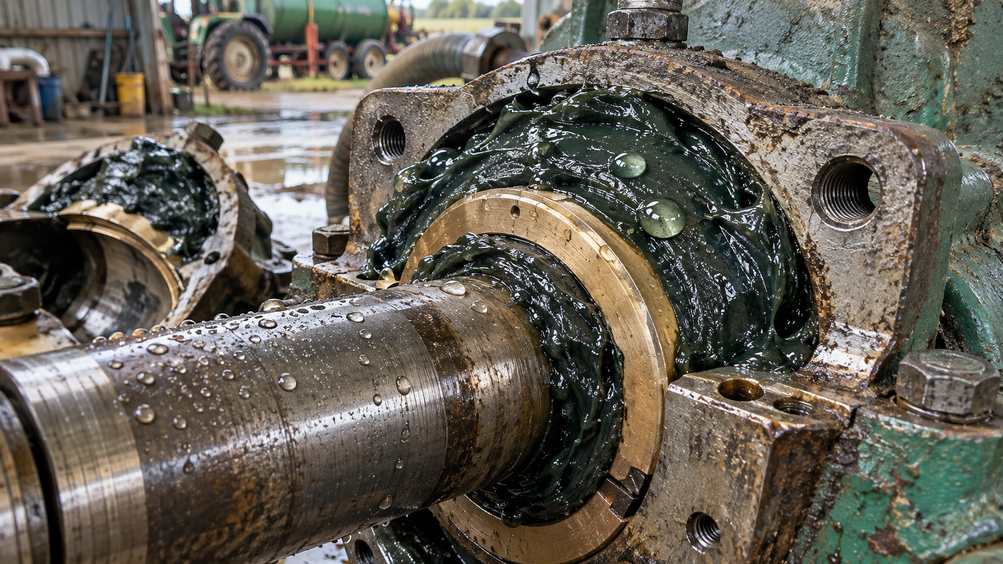
Pal Cup water-resistant grease for pumps and submerged equipment, providing reliable water protection and strong adhesion. Enquire with PALCO today.
When maintaining industrial machinery and agricultural equipment, engineers and technicians face a constant battle against environmental contaminants. While heat and heavy shock loads receive significant attention, moisture remains one of the most destructive forces a mechanical system can encounter. Water infiltration compromises the structural integrity of standard lubricants, leading to rapid component failure. For equipment that operates in damp environments, splash zones, or fully submerged conditions, water-resistant grease provides a specialised barrier against moisture.
To combat the devastating effects of moisture, maintenance professionals turn to formulations specifically engineered for aquatic resistance. Developed to meet these exact industrial demands, Pal Cup Grease offers a powerful defence mechanism for water pumps and plain bearings. Manufactured by Paras Lubricants Limited, this calcium-based grease provides reliable, everyday protection for machinery operating under normal service conditions where water exposure is a constant threat.
The Destructive Mechanics of Water Contamination
Water contamination is a leading cause of premature bearing failure across all industrial sectors. When ordinary greases are exposed to high moisture levels, they undergo a process called emulsification. The water mixes physically with the grease structure, causing it to soften, thin out, and eventually wash away entirely.
Once the protective boundary layer of grease is stripped from the metal, several catastrophic chain reactions occur:
- Flash Rusting: Bare metal exposed to oxygen and water begins to oxidise immediately. This rust creates a highly abrasive surface that grinds against moving parts.
- Loss of Lubricity: Emulsified grease loses its ability to keep metal surfaces separated, causing friction to spike dramatically.
- Seal Degradation: When grease washes out, water and abrasive grit can bypass the mechanical seals, entering the internal housing of the water pump or plain bearing.
- Thermal Runaway: As friction increases due to the lack of a lubricating film, localised temperatures rise rapidly, leading to metal fatigue and component seizure.
Using a general-purpose lithium grease in a water pump is a critical error. While lithium excels at high temperatures, it lacks the aggressive hydrophobic properties required to survive in a submerged environment.
The Calcium Soap Advantage: Decoding Pal Cup Grease
To solve the moisture problem, industrial chemists rely on calcium soap thickeners. Pal Cup Grease is meticulously formulated using a premium calcium soap base blended with highly refined mineral oils. This creates a distinct greenish-black, smooth, and homogeneous gel that is exceptionally stable in the presence of water.
Unlike lithium or sodium thickeners, a calcium base naturally repels water. It refuses to absorb moisture, ensuring the grease maintains its structural integrity and adhesive properties even when completely submerged.
Key technical characteristics of this formulation include:
- Optimal Drop Point: With a minimum drop point of 100°C, the grease remains stable under moderate operating conditions.
- Working Temperature Range: It is explicitly engineered for equipment operating at or below 70°C.
- Superior Adhesion: The inclusion of specialised tackifiers ensures the grease clings tightly to metal surfaces, preventing displacement from vibration or continuous water flow.
- Consistent Texture: Boasting a cone penetration of 280 to 330 at 25°C, it provides a smooth, dependable film that is free from abrasive particles.
Water-Resistant Grease for Industrial and Agricultural Applications
Because it is highly affordable and incredibly reliable, this calcium-based formulation is a staple in maintenance workshops worldwide. Rather than being a one-size-fits-all solution, it is highly targeted for specific low-speed and medium-load applications.
Water Pump Bearings and Seals: Centrifugal pumps, submersible pumps, and agricultural irrigation pumps are constantly exposed to fluid dynamics. Applying this grease to the packing and seals creates an impenetrable waterproof barrier. It prevents fluid leaks while ensuring the internal bearings remain fully lubricated, drastically reducing maintenance downtime during critical crop seasons.
Textile and paper mill machinery manufacturing environments that utilise heavy amounts of water or steam require continuous protection. The slow-speed plain bearings found in paper processing units or textile washing lines are perfectly suited for calcium-based lubrication. The grease resists being washed away by the constant splash and humidity of the factory floor.
Exposed Mechanical Components: For general machinery that sits outdoors and is subjected to heavy rain and environmental humidity, applying a thick layer of water-resistant grease halts rust in its tracks. It is widely recommended for exposed linkages, pivot points, and sliding mechanisms where extremely high temperatures are not a factor.
Implementing a Smart Lubrication Strategy
Even the most advanced water-resistant grease must be applied correctly to maximise its lifespan. Contamination during application is a frequent, yet easily avoidable, mistake.
Technicians must thoroughly clean all grease fittings and bearing housings before introducing fresh lubricant. Pumping new grease over old, contaminated grease simply pushes abrasive dirt deeper into the bearing cavity. When servicing water pumps, operators should pump the fresh calcium grease slowly until the old, discoloured grease purges completely from the relief port, ensuring the internal cavity is packed exclusively with clean, waterproof lubricant.
By standardising maintenance protocols around a dedicated moisture-resistant product, fleet operators and industrial managers can significantly lower their replacement part costs. A proactive approach to aquatic environments ensures that pumps keep pumping, mills keep turning, and agricultural operations run smoothly from planting to harvest.