
Over the last decade, one question has consistently surfaced in industry discussions: are synthetic engine oil and synthetic lubricants simply a premium trend, or are they redefining the future of lubrication?
For many years, mineral oils dominated the market because they were cost-effective and widely available. Synthetic lubricants and synthetic engine oil were viewed as niche products, mostly used in high-performance vehicles or demanding industrial applications. Today, that perception has changed. What was once considered premium is steadily becoming mainstream.
The shift toward synthetic lubricants and synthetic engine oils is not accidental. It is being shaped by technology, regulation, and economics.
How Synthetic Engine Oil Is Rewriting the Lubricant Market
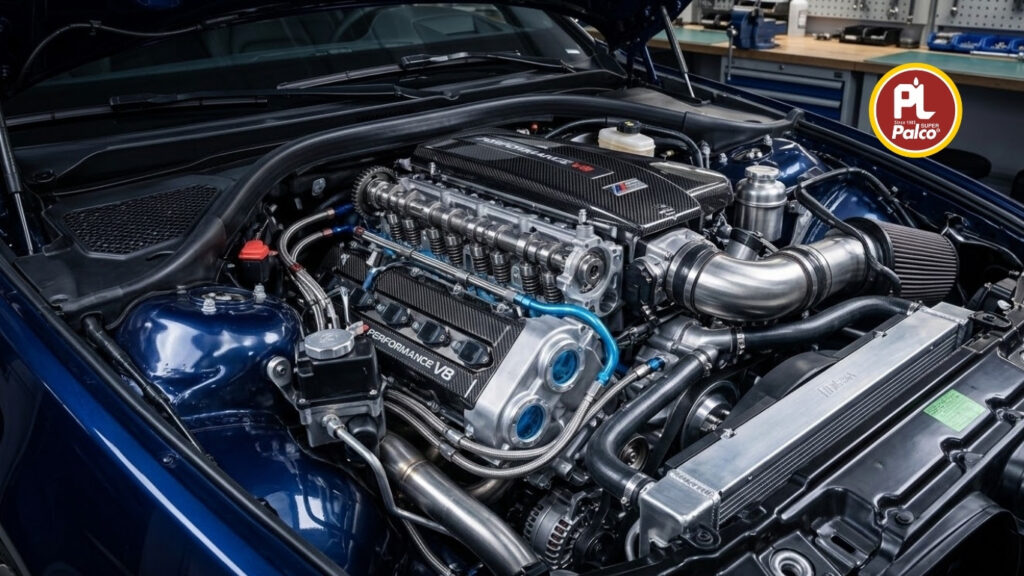
Vehicle engines have evolved significantly. Modern engines are smaller, more powerful, turbocharged, and designed for tighter tolerances. They operate under higher thermal and mechanical stress. At the same time, emission norms continue to tighten, and OEMs are demanding lubricants that improve fuel efficiency and reduce friction.
Mineral oils, by design, have limitations in thermal stability, oxidation resistance, and volatility control. Synthetic lubricants, on the other hand, are engineered at the molecular level. They offer better viscosity control across temperature ranges, longer drain intervals, improved engine cleanliness, and enhanced wear protection.
Globally, the share of synthetic and semi-synthetic lubricants has been steadily rising. In mature markets, synthetics already command a significant portion of the passenger car motor oil segment. Emerging markets like India are following a similar path, although at a different pace.
The real question is not whether synthetics will grow. It is how fast the shift will accelerate.
Synthetic Engine Oil: Value Shift from Volume to Profitability
From a finance and strategy perspective, synthetic lubricants are reshaping business models.
Traditionally, the lubricant business was largely volume-driven. Margins were often under pressure due to intense price competition, especially in mineral oil segments. Synthetic lubricants introduce a different equation. While raw material costs are higher due to premium base oils and advanced additive packages, the value proposition is stronger.
Higher performance allows for premium pricing. Longer drain intervals reduce the total cost of ownership for customers. For distributors and retailers, premium products often translate into better margins per litre.
However, this shift also demands disciplined financial planning. Working capital requirements may change. Inventory planning becomes more complex due to expanded product portfolios. Pricing strategy must balance competitiveness with value positioning. Education and marketing investments increase, as end users need to understand why they should move up the value chain.
For manufacturers, the transition is not just technical. It is strategic. Those who position themselves only around price may find it difficult to compete in a synthetic-dominated future. Those who build credibility, technical strength, and brand trust are likely to benefit.
Regulatory and OEM Influence
Emission standards such as BS VI in India have indirectly accelerated the move toward higher-quality lubricants. OEM recommendations increasingly specify lower viscosity grades and higher API and ACEA standards, many of which are better supported by synthetic formulations.
As vehicle warranties become stricter and service intervals longer, using suboptimal lubricants becomes a risk that fleet owners and individual customers are less willing to take.
In industrial applications as well, downtime costs have become more visible. Plants today measure productivity in minutes, not days. Longer-lasting, thermally stable lubricants reduce maintenance frequency and unexpected breakdowns. This strengthens the case for synthetic solutions beyond the automotive segment.
Export and Global Alignment
From an export standpoint, synthetic lubricants are also strategically important.
International markets, particularly in Europe, the Middle East, and parts of Asia, increasingly expect higher specifications. Competing globally requires alignment with these standards. Companies that invest early in synthetic technology are better positioned to serve these markets.
At Paras Lubricants Limited – Palco, with nearly four decades in the lubricant industry, this shift is viewed not as a passing trend but as a structural evolution. Over the years, the company has witnessed multiple transitions: from mono-grade to multi-grade oils, from conventional formulations to advanced additive technologies. Each phase initially appeared premium. Over time, it became standard.
The same pattern is visible with synthetics.
Is It a Trend or a Long-Term Shift?
Short-term trends are usually driven by marketing narratives. Long-term shifts are driven by technology, regulation, and economics working together.
Synthetic lubricants check all three boxes.
Technology is demanding higher performance. Regulations are pushing for efficiency and lower emissions. Customers are becoming more aware of lifecycle costs rather than just upfront price. OEMs are tightening specifications. Global trade is aligning quality benchmarks across borders.
All of this suggests that synthetic lubricants are not a temporary premium segment. They are steadily moving toward becoming the baseline in many categories.
That does not mean mineral oils will disappear overnight. Price-sensitive markets and older vehicle segments will continue to rely on them for years. The transition will be gradual, and the market will remain mixed. But the direction is clear.
Strategic Outlook
For lubricant manufacturers, the coming decade will likely revolve around portfolio balancing. The focus will not only be on expanding synthetic offerings but also on building strong technical capabilities, supply chain stability for premium base oils, and consistent quality systems.
Investment in R&D, additive partnerships, and testing infrastructure will become more important. Brand credibility and technical education will differentiate serious players from opportunistic ones.
For distributors and channel partners, understanding product positioning and communicating value will be critical. For end users, the conversation will increasingly move from “price per liter” to “performance per kilometer” or “cost per operating hour.”
Synthetic lubricants are no longer confined to performance cars or specialized industries. They are entering the mainstream, driven by structural forces that are unlikely to reverse.
The industry has seen many cycles over the last 40 years. Some changes faded. Others reshaped the market permanently. The rise of synthetic lubricants appears to belong to the latter category.
The strategic question for every lubricant company is not whether to participate in this shift, but how prepared they are to lead it. [ Synthetic lubricants, Synthetic engine oil, Future of synthetic lubricants, Lubricant industry trends, Global lubricant market, Automotive lubricants industry, Industrial lubricants market, High performance engine oil, Advanced lubricant technology, Long drain interval engine oil, OEM recommended engine oils, BS VI engine oils, Premium lubricants market, Lubricant manufacturing industry, Automotive oil technology, Industrial machinery lubrication, Engine efficiency lubricants, Lubricant market growth India, Synthetic vs mineral oil, Lubrication technology trends, Paras Lubricants Limited, Palco, Palco engine oil, Palco synthetic lubricants ]