
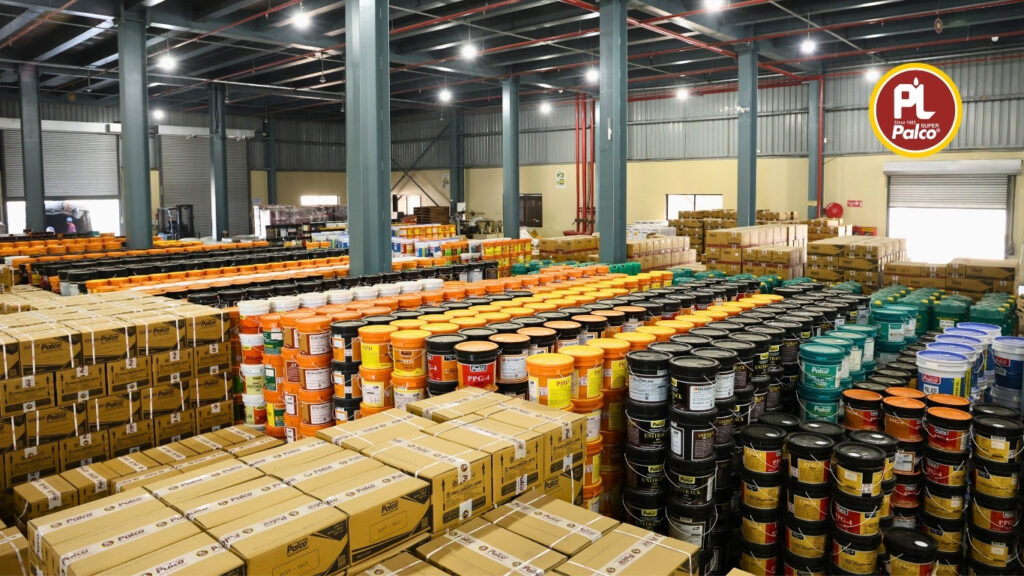
Growth in manufacturing excellence rarely follows a straight line.. In the lubricant industry, it certainly does not. Behind every stable formulation, every smooth batch dispatch, and every satisfied OEM or distributor lies the journey toward true manufacturing excellence.
At Paras Lubricants Limited – Palco, progress has not been built on perfect decisions. It has been built on corrected decisions.
This is not a story about errors. It is a story about maturity.
Manufacturing Excellence: When Volume Outpaced Systems
There was a phase when demand began to rise faster than internal systems. Orders increased. Dealer networks expanded. Production schedules became tighter.
The assumption was simple: if output increases, growth follows.
But growth without systems exposes weaknesses.
Batch planning became reactive instead of predictive. Minor scheduling misalignments led to unnecessary machine idle time. Quality checks were being done, but documentation discipline was inconsistent. Nothing catastrophic, but enough to signal that scale requires structure.
The lesson was clear: manufacturing excellence is not about producing more; it is about producing consistently.
That realization led to tighter batch coding protocols, clearer QC checkpoints, and stronger inter-department coordination. Growth began aligning with discipline.
Manufacturing Excellence Starts with Raw Material Consistency
In lubricant manufacturing, formulations are scientific, but execution is operational. A formulation may be technically sound, yet variations in base oil sourcing or additive supply can create subtle inconsistencies.
At one point, procurement decisions leaned too heavily toward cost optimization. The impact was not dramatic, but enough to highlight something important: stability in quality is rooted in stability in sourcing.
It reinforced a fundamental principle, procurement is not a finance decision alone. It is a technical decision.
Since then, vendor evaluation has become more rigorous. Testing protocols at Palco became more structured. Incoming raw material inspection standards were strengthened. Vendor relationships shifted from transactional to technical collaboration.
Quality begins before production starts.
Documentation Is Not an Administrative Task
In many manufacturing environments, documentation is often treated as a compliance formality. That mindset creates invisible risk.
There were instances where process knowledge lived more in people than in systems. Experienced operators knew the right temperature adjustments or mixing sequences, but that knowledge was not always codified.
When people become the system, scalability suffers.
The correction was cultural. SOPs were rewritten. Batch sheets were standardized. Lab records were digitized. Audit trails became non-negotiable.
Technical leadership means ensuring that expertise is institutional, not individual.
Quality Control: Inspection vs Prevention
Another learning came from understanding the difference between detecting defects and preventing them.
Initially, focus leaned heavily toward final inspection. Products were tested before dispatch, ensuring specifications were met. But prevention inside the process was not always emphasized enough.
The shift toward in-process quality control changed that mindset. Instead of asking, “Did the batch pass?” the question became, “What can prevent deviation before it occurs?”
Sampling frequency was reviewed. In-line checks became stricter. Data trends started being monitored more closely rather than reviewed retrospectively.
This shift improved consistency and reduced rework. It also strengthened confidence across dealer and industrial segments.
At Paras Lubricants Limited – Palco, quality today is less about catching errors and more about designing them out of the system.
Scaling the Team Alongside the Plant
Production expansion often focuses on machinery, storage capacity, and dispatch capability. But human capability must grow at the same pace.
There was a time when technical roles expanded faster than structured training. New team members were onboarded, but learning was informal.
That gap revealed itself in minor coordination lapses and avoidable rework cycles.
Structured training programs were introduced. Cross-functional exposure between QC, production, and procurement became more intentional. Technical review meetings became more data-driven.
Leadership in manufacturing is not only about machines running efficiently. It is about people understanding why they run the way they do.
Balancing Speed and Stability
In a competitive lubricant market, speed matters. Faster dispatch, quicker new product launches, shorter lead times. However, speed without validation introduces risk.
There were moments when aggressive timelines created pressure on internal validation cycles. Those experiences reinforced something fundamental: credibility takes years to build and minutes to compromise.
Today, validation protocols are non-negotiable. New product formulations undergo structured trials. Stability tests are documented thoroughly. Claims are aligned with tested performance, not market trends.
Technical leadership demands restraint when required.
Moving from People-Driven to System-Driven Operations
One of the most important transitions in the journey has been moving toward system-driven operations.
Earlier phases relied heavily on key individuals to coordinate production flow, quality approvals, or dispatch clearances. That works in smaller setups. It does not work in growth phases.
Structured dashboards, batch tracking systems, layered quality approvals, and defined escalation matrices now guide operations at Paras Lubricants Limited – Palco.
When systems lead, predictability improves.
When predictability improves, confidence grows.
What These Lessons Mean for the Future
Mistakes are expensive teachers, but they are honest ones.
Every operational challenge reinforced the importance of discipline. Every quality deviation strengthened preventive controls. Every scaling difficulty pushed the organization toward stronger technical frameworks.
The next phase of growth is not only about expanding market presence. It is about deepening technical reliability.
Plans ahead focus on:
- Stronger data analytics in production
- More advanced laboratory testing capabilities
- Greater supplier integration
- Automation in batch traceability
- Structured technical training programs
The foundation is now clearer than ever: sustainable growth in the lubricant industry depends on quality integrity, process discipline, and technical accountability.
Manufacturing excellence is not built in perfect conditions. It is built in moments where weaknesses are acknowledged and corrected.
Looking back, the journey at Palco has been shaped as much by what did not go right as by what did. Those lessons continue to influence how decisions are made today. And perhaps that is the real measure of technical leadership, not avoiding mistakes entirely, but ensuring that each one strengthens the system for the long term.