
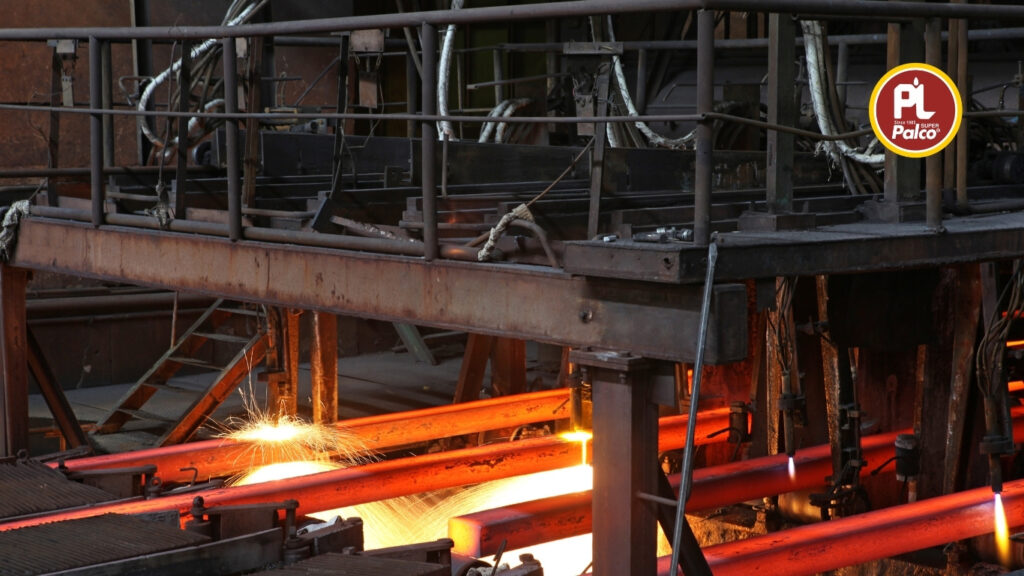
In such environments, selecting the right industrial grease for steel plants becomes critical to ensuring equipment reliability and production continuity.
They run in extreme heat, under continuous load, in dusty and often contaminated environments. Bearings rotate under pressure. Rollers operate near furnaces. Equipment faces shock loads, water ingress, scale particles, and long duty cycles.
In such conditions, industrial lubrication solutions is not a routine maintenance activity. It is a production-critical decision.
Over the last two decades, the industrial grease market in India has evolved significantly. Earlier, grease selection was often driven by availability or cost. Today, as manufacturing standards improve and uptime expectations increase, the conversation has shifted toward performance, reliability, and lifecycle cost.
For heavy industries like steel, this shift is especially visible in how high performance industrial grease for steel plants is now evaluated based on performance rather than cost.
Operating Conditions for Industrial Grease in Steel Plants
Steel manufacturing environments present some of the harshest lubrication challenges:
Steel plants operate under some of the most demanding industrial conditions. Equipment is exposed to high temperature industrial grease around furnaces and continuous casting lines, heavy and shock loads in rolling mill operations, and constant exposure to water in cooling sections where washout risks are common.
At the same time, dust, scale, and metal particle contamination are part of the everyday environment. With plants running around the clock and very little tolerance for downtime, lubrication systems must perform reliably under continuous stress.
In such settings, choosing the wrong grease selection for factories & steel plants does not just lead to bearing failure. It leads to unplanned shutdowns, maintenance overruns, and production losses.
A single lubrication error can ripple across the entire production schedule.
That is why grease selection must be aligned with equipment design, operating conditions, and maintenance strategy.
From Commodity Thinking to Performance Thinking
Historically, many factories treated grease as a consumable. If a bearing failed, it was replaced. If grease washed out, it was reapplied. The focus was short-term.
Today, plant heads and maintenance leaders are thinking differently.
Downtime is expensive. Energy efficiency matters. Predictive maintenance systems are being implemented. Reliability-centered maintenance is no longer a theoretical concept; it is becoming standard practice.
This shift has changed how industrial greases are evaluated.
Instead of asking, “What is the price per kilogram?” the right question now is, “What is the cost per operating hour?”
High-performance greases such as lithium complex, calcium sulfonate complex, and specialty high-temperature formulations are gaining traction in steel and heavy manufacturing sectors. These products offer better thermal stability, improved load-carrying capacity, superior resistance to water washout, and longer service intervals.
The upfront cost may be higher. The lifecycle benefit is significantly greater.
Technical Parameters for Industrial Grease in Steel Plants
In steel plants and heavy factories, grease selection should consider:
In steel plants and heavy industrial environments, grease selection must be aligned with the operating conditions of the equipment. Factors such as dropping point and thermal stability become critical for areas exposed to high temperatures. Load-carrying capability, particularly extreme pressure (EP) properties, is essential for rolling mill equipment and heavy-duty bearings.
Water resistance is equally important in sections exposed to cooling systems where washout can occur. In addition, oxidation stability helps ensure longer service life, while strong mechanical stability allows the grease to maintain its structure even under repeated shock loads and continuous operation.
Grease must not only survive the environment; it must protect equipment consistently over time.
This is where technical leadership becomes critical.
Lubrication cannot remain only a purchase department decision. It must involve maintenance engineers, reliability teams, and technical advisors who understand application-specific requirements.
Structured steel plant maintenance lubrication audits, correct relubrication intervals, and compatibility checks are becoming increasingly important in large plants.
Market Growth and Industrial Expansion
India’s manufacturing and infrastructure sectors are expanding. Steel production capacity continues to grow. New plants are being commissioned. Existing facilities are modernizing.
With automation, higher production speeds, and stricter quality benchmarks, equipment tolerances are becoming tighter. Bearings operate under more demanding conditions than before.
This naturally increases the demand for advanced lubrication solutions.
The industrial grease market is no longer limited to general-purpose products. Specialty and application-specific greases are driving growth. Manufacturers are investing in R&D, quality control systems, and testing facilities to meet evolving industrial standards.
In this changing landscape, consistency and technical expertise carry significant weight.
The Role of Experience and Quality Systems
As steel production scales, the role of high-performance industrial grease for steel plants will continue to grow in ensuring operational reliability.
For over 40 years, Paras Lubricants Limited – Palco has been associated with India’s lubrication industry, serving both automotive and industrial sectors. Experience in heavy-duty applications, especially in demanding manufacturing environments, reinforces one clear understanding:
Industrial grease for steel plants is not just a lubricant. It is a reliability tool.
Consistency in base oil quality, thickener chemistry, additive systems, and batch control directly impacts performance at the plant level. Even small variations can influence stability and protection under extreme conditions.
Technical support also matters. Application guidance, site studies, and performance monitoring help ensure that the selected product delivers expected results in real operating conditions.
As industrial plants move toward structured maintenance programs, partnerships with technically capable lubricant manufacturers become more important.
Production Efficiency and Long-Term Thinking
When grease selection is aligned correctly:
When the right grease is selected and applied correctly, the benefits extend across the entire operation. Bearing life improves, relubrication intervals become longer, and energy consumption can reduce due to smoother equipment movement.
Maintenance schedules also become more predictable, allowing teams to plan servicing more effectively. Most importantly, the chances of unplanned breakdowns decline, helping plants maintain stable production and avoid costly interruptions.
All of this contributes directly to production efficiency.
In a steel plant, reliability is not just about equipment. It affects delivery timelines, client commitments, and overall profitability.
The industry is gradually recognizing that lubrication strategy is part of operational strategy.
Moving Forward: The Future of Industrial Lubrication
India’s manufacturing ecosystem is evolving rapidly. With increasing global competition, higher export focus, and modernization of industrial infrastructure, the expectations from plant operations are rising.
Grease technology will continue to advance. More application-specific solutions, better thermal stability, improved environmental resistance, and compatibility with automated lubrication systems will shape the next phase of growth.
But technology alone is not enough.
Quality discipline, structured evaluation, and technical leadership will define which plants achieve consistent reliability and which struggle with recurring breakdowns.
In heavy industries like steel, lubrication decisions may appear small on paper. In reality, they influence the foundation of production stability.
As manufacturing capacity grows, the importance of informed grease selection will only increase.
Because when it comes to industrial grease for steel plants, performance is not optional. It is engineered. It is engineered. [ Industrial Grease for Steel Plants, Grease for Steel Industry, Heavy Duty Industrial Grease, Lubrication in Steel Plants, Industrial Lubrication Solutions, Grease Selection for Factories, High Temperature Industrial Grease, Steel Plant Maintenance Lubrication, Industrial Bearing Grease, Manufacturing Lubrication Systems, Steel Industry Lubrication, Factory Maintenance Best Practices, Industrial Reliability Engineering, Manufacturing Efficiency, Technical Leadership in Lubrication, Paras Lubricants Limited, Palco, Industrial Grease, Indian Lubricant Manufacturer, Industrial Lubricant Manufacturers India, Lubrication Solutions by Palco, Trusted Lubricant Brand in India ]