
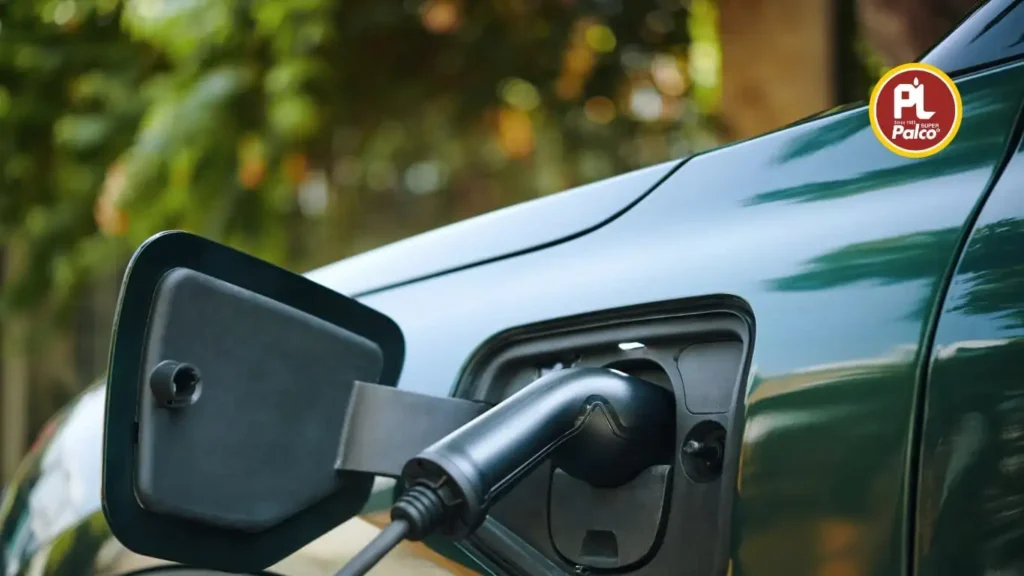
A Finance & Strategy Perspective
For decades, the lubricant industry followed a predictable growth model. Rising vehicle ownership, expanding road networks, industrialization, and increasing freight movement translated directly into higher engine oil consumption. Volume was the primary growth driver, especially in emerging markets like India.
Today, that equation is changing.
The rapid growth of electric vehicles is beginning to reshape the lubricant landscape. While the shift is gradual rather than abrupt, its financial and strategic implications are significant. The question is no longer whether EVs will impact lubricants. The real question is how deeply and how quickly.
The Traditional Growth Model: Volume-Led Expansion
The lubricant industry historically grew in parallel with internal combustion engine vehicles. More vehicles meant more oil changes. Higher engine performance requirements meant premium formulations. The structure was straightforward:
- Growth in vehicle population
- Stable drain intervals
- Strong aftermarket replacement demand
- Increasing penetration of synthetic oils
In India, two-wheelers and passenger vehicles formed the backbone of automotive lubricant demand. For companies that built strong distribution networks and brand credibility over decades, this model offered steady cash flows and scalability.
Paras Lubricants Limited with nearly 40 years in the industry, have witnessed multiple cycles of regulatory change, fuel transitions, and technology upgrades. However, EV growth represents a structural shift rather than a cyclical one.
EVs: Redefining Demand, Not Eliminating It
Electric vehicles do not require engine oil. This is the most visible and frequently discussed impact. As EV penetration rises, the total addressable market for passenger car engine oils will gradually compress.
But the narrative is incomplete if it stops there.
EVs introduce new fluid requirements:
- Thermal management fluids for battery cooling
- Transmission fluids for e-axles
- Specialized greases for electric motors
- Coolants with enhanced electrical insulation properties
The shift is not from “lubricant to no lubricant.” It is from conventional engine oils to specialized, technology-intensive fluids.
From a financial perspective, this represents a transition from volume-led growth to value-led growth.
Financial Impact: Volume Compression vs Value Migration
In the short to medium term, especially in India, internal combustion engines will continue to dominate. Hybrid vehicles are also gaining traction, sustaining lubricant demand for longer than initially anticipated.
However, over the next decade, the industry may experience:
- Slower growth in engine oil volumes
- Margin pressure in commoditized segments
- Increased R&D expenditure
- Higher technical barriers to entry in EV fluids
The lubricant companies that relied heavily on entry-level mineral oils could see compression. In contrast, companies with diversified portfolios, strong balance sheets, and technical capabilities may find new margin pools in advanced fluids and industrial lubricants.
Strategically, this demands disciplined capital allocation. Investment in new product development must be balanced against cash flow realities of the existing business.
Strategic Shifts Required
The EV transition is less about fear and more about adaptation. Several strategic adjustments are already visible across the industry:
1. Portfolio Diversification
Reducing overdependence on passenger car engine oils and strengthening presence in industrial lubricants, greases, specialty oils, and export markets.
2. Technology Investment
Developing EV-compatible fluids requires deeper formulation expertise and validation standards. This shifts competition from distribution strength alone to technical capability.
3. Hybrid Focus
Hybrid vehicles will act as a bridge technology. They often require higher-performance lubricants due to start-stop conditions and thermal cycling. This creates premiumization opportunities.
4. Export Orientation
Many developing markets will continue using ICE vehicles for decades. Companies with export readiness can balance domestic EV-led slowdown with international growth.
Paras Lubricants Limited long-term presence in the market provides a unique advantage. Having navigated transitions from conventional oils to BS-compliant formulations and from mineral to synthetic categories, the organization understands that technological shifts reward preparedness, not panic.
India vs Global Markets: A Different Curve
Globally, EV adoption is accelerating faster in Europe and parts of China. In India, the transition will likely be phased and uneven.
Two-wheelers and commercial fleets may electrify more rapidly in urban centers. However, rural markets, long-haul transport, and heavy-duty segments will remain dependent on conventional fuels for years.
This staggered adoption curve offers Indian lubricant companies a strategic window:
- Continue optimizing ICE product profitability
- Gradually build EV fluid capabilities
- Avoid premature over-investment
- Strengthen brand positioning in high-performance segments
The financial discipline during this transition phase will separate reactive players from strategic ones.
Beyond Automotive: Expanding the Definition of Growth
Another important dimension is industrial demand. As manufacturing, renewable energy, infrastructure, and heavy machinery sectors expand, industrial lubricants, hydraulic oils, gear oils, and specialty greases offer stable growth avenues.
EV manufacturing itself increases demand for advanced greases, metalworking fluids, and process oils.
This broadens the strategic view. The lubricant industry is not shrinking; it is evolving.
Companies that redefine themselves not as “engine oil manufacturers” but as “fluid technology partners” are better positioned for long-term resilience.
Long-Term Outlook: Disruption or Transformation?
EV growth is not an overnight disruption. It is a gradual transformation. Internal combustion engines will coexist with electric drivetrains for a long period, particularly in emerging economies.
The industry’s future will likely look like this:
- Lower reliance on commodity engine oil volumes
- Higher share of specialty and synthetic products
- Stronger technical partnerships with OEMs
- Greater emphasis on exports and industrial segments
- More disciplined financial planning
For companies with decades of experience, adaptability becomes the core strategic asset. Nearly 40 years in the market have shown that change is constant. Regulatory shifts, crude price volatility, emission norms, and synthetic transitions have all reshaped the industry before.
The EV wave is another chapter in that evolution.
For Palco, the focus remains on balancing legacy strengths with forward-looking investments. Growth will not disappear. It will redistribute.
The lubricant industry is not entering decline. It is entering specialization.
And in specialization lies the next phase of strategic opportunity.
[ EV growth lubricant industry, Palco lubricant industry insights, Impact of EV on lubricant market, Electric vehicles lubricant demand, EV fluids market India, Palco EV fluid strategy, Future of lubricant industry India, EV impact on engine oil demand, EV thermal management fluids, Hybrid vehicle lubricant market, Lubricant industry finance strategy, Specialty greases for EV, Electric vehicle transmission fluids, Lubricant industry transformation ]