
Friction and lubrication control heat, reduce wear, and improve machine efficiency. Discover the science behind effective lubrication with PALCO.
Imagine riding a bicycle without oiling its chain, running an engine without engine oil, or operating an industrial machine without properly lubricating its moving parts. At first, everything might appear normal. But as the machine continues to work, heat builds up, components begin to wear, efficiency drops, and eventually something may fail.
The common factor behind all these problems is friction—and understanding the relationship between friction and lubrication is essential for maintaining machine efficiency, reducing wear, and extending component life.
Friction is a force we experience every day. It helps us walk, allows vehicles to stop when we apply the brakes, and gives us the grip needed to hold objects. But when friction occurs between moving machine components, it can become a major source of energy loss, heat, and wear.
This is where effective lubrication becomes essential for controlling friction, reducing wear and helping machines operate efficiently.
What Is Friction?
Friction is a force that opposes the relative motion between two surfaces that are in contact with each other.
For example, when you slide a book across a table, the book does not continue moving forever. It gradually slows down because friction acts between the bottom surface of the book and the table.
The same principle applies inside engines, gearboxes, bearings, and industrial machinery, where friction and lubrication play an important role in achieving smooth and reliable operation.
Consider two metal surfaces moving against each other. Although the surfaces may look perfectly smooth to our eyes, they are not actually smooth at a microscopic level. They contain tiny irregularities, peaks and valleys. When these surfaces come into contact, these microscopic irregularities interact with each other and resist motion.
The faster the surfaces move, the greater the potential for heat generation and wear.
Friction Is Not Always Bad
It may seem logical that friction is something engineers always want to eliminate. That is not quite true.
Friction is essential for many everyday activities.
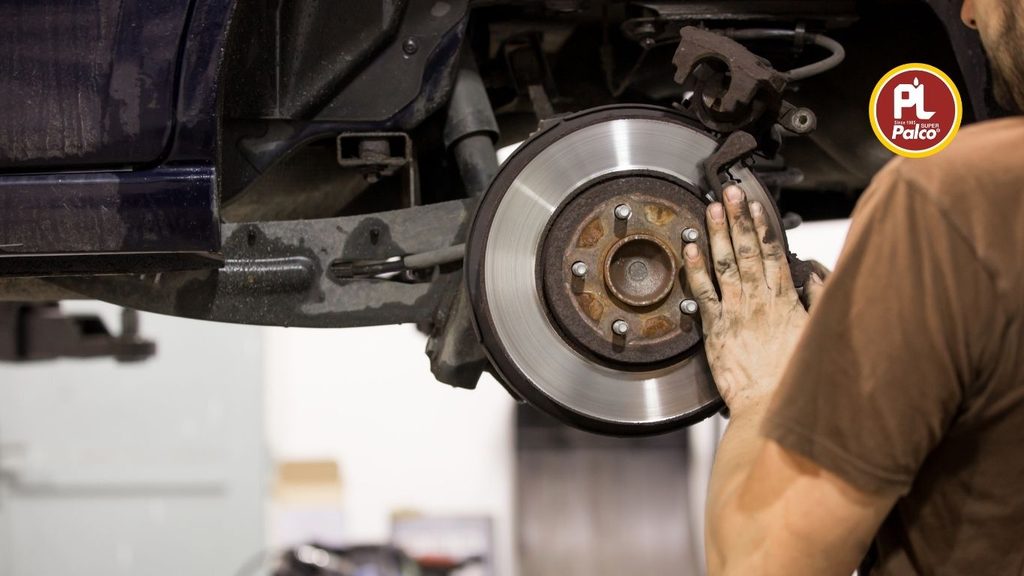
When you walk, friction between your shoes and the ground prevents your feet from slipping. Vehicle tyres rely on friction with the road to accelerate, steer and brake. Braking systems deliberately create friction to convert the vehicle’s motion into heat and slow it down.
The goal in engineering is therefore not to eliminate friction completely. Instead, engineers use friction and lubrication principles to control unwanted friction, reduce unnecessary energy loss, and minimize wear wherever possible.
Inside an engine, gearbox, bearing or industrial machine, excessive friction can be extremely damaging.
What Happens When Friction Increases?
Uncontrolled friction can create several problems.
1. Heat Generation
When surfaces move against each other, mechanical energy is converted partly into heat. This is why you can feel warmth after rubbing your hands together rapidly.
Inside a machine, continuous friction can generate significant amounts of heat. Excessive temperature can affect lubricant performance, damage components and reduce the overall life of the machine.
2. Wear and Tear
Continuous contact between moving surfaces gradually removes material from those surfaces. This is known as wear.
Gears, bearings, shafts, chains and other components can experience wear if they are not properly lubricated.
Over time, excessive wear can change the dimensions and clearances of components, affecting the performance of the entire machine.
3. Energy Loss
Machines require energy to overcome friction.
For example, an engine uses part of the energy produced during combustion simply to overcome internal resistance. If friction increases, more energy is wasted as heat instead of being converted into useful mechanical work.
Reducing unnecessary friction can therefore improve efficiency.
4. Noise and Vibration
Friction and surface interaction can also contribute to unwanted noise and vibration. In precision machinery, excessive friction can affect smooth operation and may eventually indicate that components require inspection or maintenance.
How Does Lubrication Reduce Friction and Wear?
This is where friction and lubrication become closely connected, as proper lubrication helps reduce friction, control wear, and protect moving machine components.
A lubricant is a substance introduced between moving surfaces to reduce unwanted friction and wear.
Depending on the application, industrial lubricants can be formulated as oils, greases, or other specialized products designed for specific operating conditions.
One of their most important functions is to create a lubricating film between surfaces.
Instead of allowing two metal surfaces to continuously rub directly against each other, the lubricant forms a protective layer that reduces direct surface contact.
Think about sliding two pieces of glass against each other. Now imagine placing a thin layer of suitable oil between them. The interaction changes significantly because the surfaces are no longer directly rubbing against each other in the same way.
This simple principle is fundamental to modern machinery.
Lubrication Does More Than Reduce Friction
The role of a lubricant is not limited to making surfaces move more easily.
A properly selected lubricant can perform several functions at the same time.
Heat management: Lubricants can help carry heat away from areas where it is generated.
Wear protection: A suitable lubricant film helps reduce direct contact between moving surfaces.
Corrosion protection: Many lubricants contain properties that help protect metal surfaces against rust and corrosion.
Cleaning and contamination control: Certain lubricants help suspend or carry contaminants and deposits toward filtration or drainage points.
Sealing: In some applications, lubricants help maintain seals between components and prevent the movement of unwanted materials.
This is why lubrication is considered an important part of machine design and maintenance rather than simply an additional maintenance step.
Why Is Choosing the Right Lubricant Important?
Not every lubricant is suitable for every machine.
Different components operate under different conditions. Temperature, speed, load, pressure, material, operating environment and machine design can all influence lubricant requirements.
For example, the lubricant needed for an engine is different from the lubricant required for a gearbox. Similarly, industrial bearings, hydraulic systems and heavily loaded gears may require different lubricant formulations.
One important property is viscosity.
Viscosity describes a fluid’s resistance to flow. A lubricant that is too thick may increase resistance and make it difficult for components to move efficiently. A lubricant that is too thin may fail to maintain an adequate protective film under certain operating conditions.
Therefore, proper lubricant selection, including the correct lubricant grade and specification, is essential for maintaining equipment performance and protecting critical components.
What Happens If a Machine Is Not Properly Lubricated?
Imagine a vehicle engine operating with insufficient or unsuitable lubrication. Without proper lubrication, friction can increase significantly, leading to greater heat generation, accelerated wear, and potential component damage.
As moving components interact, friction increases. More heat may be generated. The protective lubricant film may become inadequate, allowing greater surface-to-surface contact.
This can accelerate wear.
As wear increases, component performance can deteriorate. In severe cases, excessive temperature and mechanical damage can lead to component failure.
The same basic principle applies to industrial machinery. A small lubrication problem, if ignored, can eventually become a much larger maintenance issue.
That is why preventive maintenance and correct lubrication practices are important in workshops, factories, transportation and almost every mechanical environment.
Friction and Lubrication: The Key to Efficient Machine Performance
An interesting thing about friction is that engineers do not simply ask, “How can we remove friction?”
Instead, they ask, “Where is friction necessary, and where should it be controlled?”
Brakes need friction.
Tyres need friction.
Clutches depend on controlled friction.
But engine bearings, gears and many other moving components generally require lubrication to minimize unwanted friction and wear.
Understanding this distinction helps explain why lubrication is such an important part of mechanical engineering.
Understanding Friction and Lubrication in Everyday Machines
The next time you see a bicycle chain being oiled, a mechanic checking engine oil, or a machine undergoing routine maintenance, remember that there is a scientific principle behind that simple action.
Friction is constantly working inside mechanical systems.
Sometimes it helps machines perform their intended function. At other times, uncontrolled friction can consume energy, generate heat and damage components.
Lubrication gives engineers a way to manage that friction.
From the smallest bearing to large industrial equipment, the basic objective remains the same: keep moving surfaces protected, manage heat, reduce unnecessary energy loss and extend component life.
Final Thought
Friction may seem like a simple concept that we encounter every day, but it plays a fundamental role in engineering and technology.
Without friction, many things we depend on would not work. With too much uncontrolled friction, machines would become inefficient and wear out quickly.
Effective lubrication provides the bridge between these two extremes by helping control friction, manage heat, and reduce unnecessary wear.
It is a carefully engineered way of controlling friction so that machines can operate more smoothly, efficiently and reliably.
So, the next time someone says that a machine simply needs the right lubricant, remember that there is much more science behind that small bottle than meets the eye.