

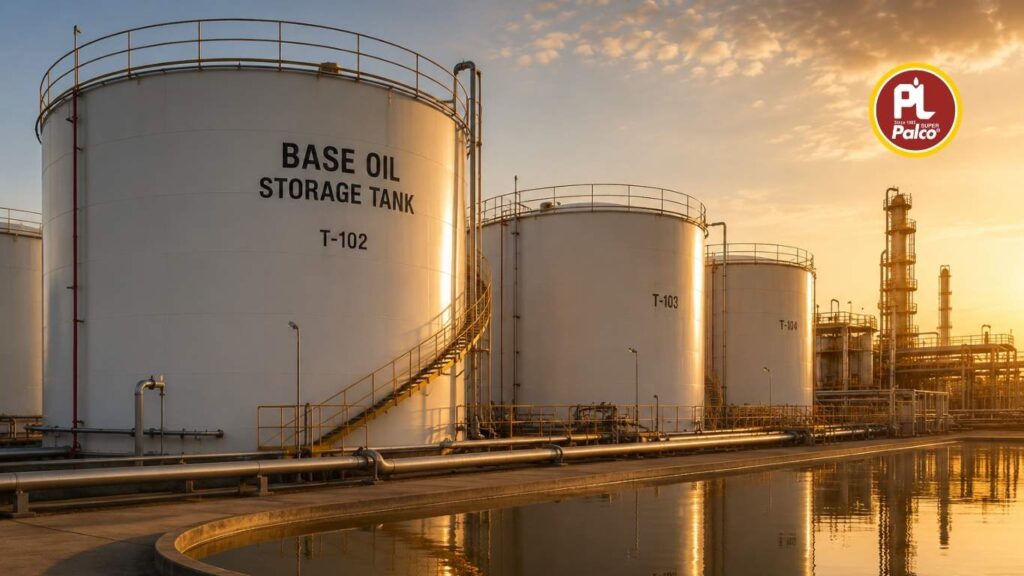
Discover how quality base oil supports lubricant performance by improving engine protection, reducing wear, and delivering reliable results in every application.
In the lubricant industry, most conversations often begin with performance claims: better protection, smoother operation, longer drain intervals, higher fuel efficiency, or improved engine cleanliness. These are important outcomes, but they are not the starting point of a great lubricant. The true foundation of reliable base oil supply lies much deeper, in something that rarely receives public attention but decides the final character of every lubricant: base oil.
Base oil supply begins with the quality of the base oil, which is the primary component of any lubricant formulation. It is the platform on which additives perform, the medium through which protection is delivered, and the element that largely defines stability, viscosity behaviour, oxidation resistance, and long-term performance. While additives bring specific functional benefits, base oil provides the structure that holds the entire formulation together. Without the right base oil, even the best additive package cannot deliver consistent results.
This is why base oil supply has become one of the most important strategic concerns for the lubricant industry. It is no longer only a procurement matter. It is connected to manufacturing reliability, product quality, cost stability, formulation flexibility, and customer trust.
The Real Beginning of Lubricant Quality
A strong base oil supply is the foundation of every lubricant, not just oil in a container. It is a carefully balanced formulation designed to perform under heat, pressure, speed, load, contamination, and long operating hours. Whether the application is a motorcycle engine, passenger car, commercial vehicle, industrial gearbox, hydraulic system, compressor, or grease manufacturing process, the base oil plays a critical role in how the lubricant behaves in real-world conditions.
A good base oil helps maintain viscosity across changing temperatures. It supports film strength between moving surfaces. It contributes to oxidation stability, which helps resist thickening and sludge formation. It also influences volatility, cleanliness, cold-start behaviour, and compatibility with additive systems.
When the base oil quality is consistent, the finished lubricant becomes more predictable. This is especially important for manufacturers because every batch must perform with the same reliability. A customer may not understand the chemistry behind a lubricant, but they quickly notice the difference when a product performs consistently across seasons, machines, vehicles, and operating conditions.
That consistency begins with base oil selection.
Why Supply Stability Matters
For lubricant manufacturers, base oil availability is directly linked to production planning. If the right grade or quality of base oil is not available at the right time, it can affect product timelines, inventory planning, pricing, and delivery commitments. This is especially important in a market where customers expect fast service, stable pricing, and dependable quality.
Supply disruptions can create multiple challenges. A manufacturer may face increased raw material costs, delayed production, limited formulation options, or the need to rework sourcing plans. In some cases, sudden changes in base oil availability can force companies to make difficult decisions between cost control and quality discipline.
This is where strategic planning becomes essential. A responsible lubricant manufacturer cannot treat base oil procurement as a last-minute activity. It requires supplier relationships, technical evaluation, inventory management, market awareness, and a clear understanding of how different base oil groups behave in different formulations.
The companies that manage base oil sourcing intelligently are better prepared to protect their customers from unnecessary instability.
Changing Engines, Changing Expectations
The importance of base oils has grown because modern machines are becoming more demanding. Engines are smaller, hotter, more efficient, and more precisely engineered than before. Emission regulations, fuel economy targets, turbocharged technologies, hybrid systems, and extended drain expectations are changing how lubricants are formulated.
Older engines could often tolerate broader lubricant behaviour. Modern engines cannot. They require oils that remain stable under higher temperatures, reduce friction, protect components under severe stress, and maintain performance over longer intervals. This has increased the demand for higher-quality base oils, synthetic technologies, and more advanced formulations.
The same transformation is visible in industrial lubrication. Equipment owners now want lower downtime, longer oil life, cleaner systems, lower maintenance cost, and better energy efficiency. These expectations cannot be met by average formulations. They require a stronger base oil foundation, supported by carefully selected additives and strict quality control.
In simple terms, the future of lubrication is becoming more technical. A reliable base oil supply is at the centre of that shift.
Base Oil and the Economics of Performance
A common mistake in lubricant buying is judging a product only by its price per litre. But lubrication is not just a purchase cost. It is an operating cost. A cheaper lubricant that oxidizes faster, thickens early, causes deposits, increases wear, or requires frequent replacement can become more expensive in the long run.
A reliable base oil supply has a direct role in this equation. A lubricant made with the right base oil can support longer service life, better protection, cleaner operation, and more stable performance. This can reduce maintenance interruptions, oil consumption, component wear, and unplanned downtime.
For fleet owners, workshops, industries, and machinery operators, this matters deeply. The cost of oil is often small compared to the cost of failure. A machine breakdown, production stoppage, engine repair, or gearbox damage can create losses far beyond the price difference between two lubricants.
That is why professional buyers are increasingly moving from a price-based mindset to a value-based mindset. They are asking better questions: Will this oil remain stable? Is it suitable for my operating conditions? Will it protect the equipment under load? Is the manufacturer consistent with quality? Is the formulation backed by technical understanding?
The answer to many of these questions begins with the base oil.
The Role of Formulation Discipline
Base oil alone does not make a finished lubricant excellent. It must be combined with the right additive system and blended under controlled manufacturing conditions. However, the best formulation strategies begin with understanding the base oil’s strengths and limitations.
Different base oils have different properties. Some offer better oxidation stability. Some perform better in low-temperature conditions. Some have lower volatility. Some are more suitable for high-performance synthetic formulations. Some are better suited for industrial applications, while others are more appropriate for automotive use.
A disciplined lubricant manufacturer studies these factors carefully. It does not simply blend based on availability or cost. It evaluates the application, performance requirement, viscosity grade, operating environment, drain interval expectation, and compatibility with additives.
This is where experience becomes valuable. Lubricant manufacturing is not only a chemical process. It is also a technical judgement process. The right formulation decisions require knowledge of machines, market conditions, customer usage patterns, and long-term performance expectations.
At Paras Lubricants Limited, this understanding has always been central to product development. For a brand like Palco, formulation is not only about meeting a specification on paper. It is about delivering reliable performance in real operating conditions.
Why the Industry Must Think Strategically
As the lubricant industry moves forward, base oil strategy will become even more important. Manufacturers will need to balance performance demands, supply chain uncertainty, sustainability pressures, cost movement, and changing technology requirements.
The future will not reward companies that depend only on routine procurement. It will reward companies that build stronger technical and sourcing systems. This includes evaluating multiple base oil options, maintaining quality consistency, improving testing standards, and staying prepared for market shifts.
Customers may never directly ask about base oil supply. They may ask for smoother engine performance, better mileage, longer drain intervals, lower maintenance, or reliable industrial operation. But behind every one of those expectations is a base oil decision made much earlier in the manufacturing process.
That is the silent importance of base oils. They may not always appear in the headline, but they shape the outcome.
The Road Ahead
The lubricant industry is entering a phase where performance expectations are becoming sharper and tolerance for inconsistency is becoming lower. Machines are more advanced. Customers are more informed. Applications are more demanding. Competition is stronger. In such an environment, lubricant quality cannot be built on shortcuts.
Base oil supply is not just a raw material issue. It is a strategic shield for manufacturers and a performance assurance for customers. It protects production continuity, formulation reliability, product integrity, and long-term brand trust.
For lubricant companies, the message is clear: the future belongs to those who understand the chemistry behind performance and the supply chain behind chemistry. For customers, the lesson is equally important: the right lubricant is not defined only by its label, viscosity grade, or price. It is defined by the quality of thinking, sourcing, formulation, and control behind it.
Base oil may remain silent, but its role is powerful. It is the backbone of lubricant performance, the foundation of consistency, and one of the strongest indicators of how prepared a lubricant brand is for the future.