
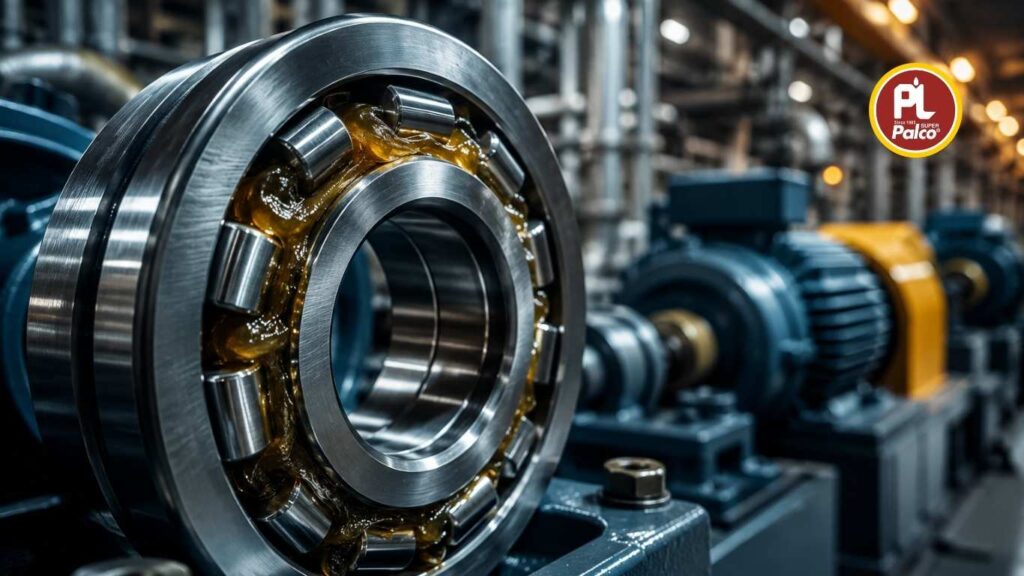
Choosing the right grease doesn’t have to be difficult. Find out what matters most for better equipment protection and longer service life.
In many industrial environments, lubrication receives attention only when something goes wrong. Bearings fail, equipment overheats, downtime increases, and maintenance costs begin to rise. Yet one of the most overlooked contributors to these problems is often the grease itself.
For decades, grease has been viewed as a simple consumable. Many organizations select grease based on availability, familiarity, or price rather than application requirements. However, modern machinery operates under increasingly demanding conditions, making grease selection a far more critical engineering decision than many realize.
The reality is simple: the wrong grease can significantly reduce equipment life, increase energy consumption, and create costly maintenance challenges. The right grease, on the other hand, can improve reliability, extend service intervals, and contribute directly to operational efficiency.
As industries continue to demand higher productivity from their assets, understanding grease selection has become more important than ever.
Grease Is More Than Just Thick Oil
A common misconception is that all greases perform the same function and therefore can be used interchangeably. In reality, grease is a carefully engineered lubricant consisting of three primary components:
- Base Oil
- Thickener System
- Performance Additives
The base oil provides lubrication, the thickener holds the oil in place, and additives enhance performance under specific operating conditions.
Different combinations of these components create greases with vastly different characteristics. A grease designed for high-temperature industrial bearings may perform poorly in wet environments. Similarly, a grease suitable for agricultural equipment may not be appropriate for high-speed electric motors.
This complexity means that selecting grease requires an understanding of operating conditions rather than simply choosing a familiar product.
Understanding Different Grease Types
One of the most important aspects of grease selection is choosing the appropriate thickener technology.
Lithium Grease
Lithium grease remains one of the most widely used lubricating greases worldwide.
Its popularity comes from its versatility, mechanical stability, water resistance, and cost-effectiveness.
Applications include:
- Automotive chassis lubrication
- Wheel bearings
- General industrial machinery
- Construction equipment
For many standard applications, lithium grease provides an excellent balance of performance and value.
However, not all industrial challenges can be solved with conventional lithium grease.
Calcium Grease
Calcium-based greases are particularly known for their superior water resistance.
Industries operating in wet or humid environments often benefit from calcium greases because they maintain lubrication even when exposed to moisture.
Common applications include:
- Agricultural equipment
- Marine applications
- Water pumps
- Outdoor machinery
While calcium greases offer excellent protection against water contamination, they may have temperature limitations compared to other grease technologies.
Lithium Complex Grease
As operating temperatures and load requirements increase, many industries turn to lithium complex greases.
These products offer:
- Higher dropping points
- Better thermal stability
- Enhanced load-carrying capacity
- Improved resistance to oxidation
Applications often include:
- Steel plants
- Mining operations
- Heavy industrial machinery
- High-temperature bearings
Lithium complex greases are increasingly becoming the preferred choice in demanding industrial environments where standard greases may not provide adequate protection.
Temperature Changes Everything
One of the biggest mistakes in grease selection is ignoring operating temperature.
Every grease has a temperature range within which it performs effectively.
At elevated temperatures:
- Grease can soften excessively
- Oil separation may occur
- Oxidation accelerates
- Lubrication effectiveness declines
At extremely low temperatures:
- Grease can become too stiff
- Pumpability decreases
- Lubricant flow becomes restricted
- Equipment startup becomes difficult
Many bearing failures that appear to be mechanical issues are actually lubrication failures caused by improper temperature compatibility.
As industrial processes become more demanding, temperature has become one of the most important considerations in grease selection.
Load Carrying Capacity Matters
Not all machinery experiences the same operating loads.
A lightly loaded conveyor bearing operates under very different conditions than a heavily loaded crusher bearing in a mining operation.
Under high loads, the lubricant film between metal surfaces experiences tremendous pressure. If the grease lacks sufficient load-carrying capability, metal-to-metal contact occurs, resulting in:
- Increased wear
- Surface fatigue
- Higher operating temperatures
- Premature component failure
This is where specialized Extreme Pressure (EP) greases become essential.
EP additives help maintain protective lubrication films under severe operating conditions, reducing wear and extending component life.
Selecting grease without considering load conditions often leads to unexpected maintenance problems and shortened equipment lifespan.
The Cost of Choosing the Wrong Grease
Many organizations focus on grease purchase cost while overlooking the much larger cost of equipment failure.
The financial impact of incorrect grease selection often includes:
- Bearing replacement costs
- Production downtime
- Emergency maintenance
- Increased energy consumption
- Reduced equipment reliability
In many industrial facilities, the cost of a single hour of unplanned downtime can exceed the annual cost of proper lubrication management.
Viewed from this perspective, grease should not be treated as a commodity. It should be viewed as a critical reliability component.
Common Grease Selection Mistakes
Despite advances in lubrication technology, several common mistakes continue to occur across industries.
Assuming All Greases Are Compatible
Mixing different grease types can cause severe performance issues.
Different thickener systems may react unpredictably when combined, leading to:
- Grease hardening
- Grease softening
- Oil separation
- Reduced lubrication performance
Compatibility should always be verified before changing grease products.
Using One Grease for Everything
Many facilities attempt to simplify inventory by using a single grease across multiple applications.
While this approach may appear convenient, it often results in suboptimal performance because different equipment has different lubrication requirements.
Ignoring Environmental Conditions
Water exposure, dust contamination, vibration, and chemical exposure all influence grease performance.
A grease that performs well in a clean indoor environment may fail quickly in a harsh outdoor application.
Over-Greasing Equipment
Contrary to popular belief, more grease does not necessarily provide better protection.
Over-greasing can generate excessive heat, increase energy consumption, and damage bearing seals.
Proper quantity is just as important as proper grease selection.
The Growing Importance of Application-Specific Lubrication
Modern equipment is becoming more efficient, more compact, and more demanding.
Higher operating temperatures, increased loads, tighter tolerances, and longer service intervals require lubrication solutions specifically designed for particular applications.
As a result, grease selection has evolved from a maintenance decision into a strategic reliability decision.
Forward-looking organizations increasingly work with lubricant specialists to identify products that match their exact operating conditions rather than relying on generic solutions.
Moving Ben modern industry, choosing the right grease is not simply about lubrication. It is about protecting productivity, reducing downtime, and maximizing the value of every machine.