
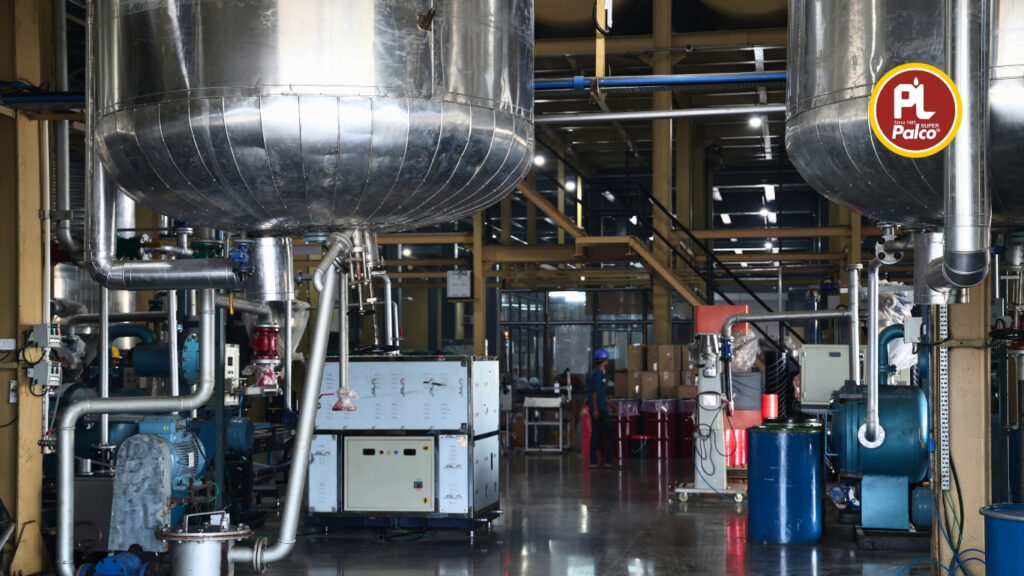
A strong lubrication ecosystem helps protect equipment, improve efficiency, and keep operations running smoothly across every industry.
Why Range Is Not About Volume, But About Understanding
In the lubricant industry, conversations often begin with categories.
Engine oils. Industrial oils. Greases. Coolants.
Because a lubrication ecosystem, in the real world, is not defined by categories. It is defined by conditions, load, temperature, environment, duty cycles, material compatibility, and operating intensity. A solution that performs efficiently in one application can underperform or even fail in another.
On paper, these classifications seem sufficient. In practice, they rarely are.
This is where the difference between a supplier and a solutions-driven manufacturer begins to emerge.
The focus has never been on simply expanding a catalogue. Instead, it has been on building a lubrication ecosystem that reflects the diversity and complexity of real-world applications across automotive, industrial, and specialty segments, an approach that has steadily shaped the way Paras Lubricants Limited (PALCO) operates and evolves within the industry.
Automotive Lubrication: From Everyday Mobility to Heavy-Duty Reliability
The automotive segment itself is not a single market. It is a layered ecosystem.
Urban mobility, commercial transportation, agricultural usage, and specialized applications each operate under very different stresses. Stop-and-go traffic, long-haul operations, load-bearing conditions, and seasonal variations all influence how a lubricant must perform.
A meaningful automotive range, therefore, is not defined by how many products it lists, but by how effectively it addresses this diversity.
The automotive portfolio has steadily evolved to support this full spectrum. From light vehicles to heavy-duty engines, and from transmission systems to braking and cooling environments, the emphasis remains on ensuring that every critical function within a vehicle ecosystem is supported by the right formulation, a philosophy that continues to guide the approach at Palco.
The objective is simple, yet demanding: consistency in performance, regardless of where and how the product is used.
Industrial Lubrication: Where Precision Meets Continuity
If automotive lubrication is about variation, industrial lubrication is about continuity.
In industrial environments, operations are often continuous, conditions are controlled yet demanding, and the cost of disruption is immediate and measurable. A single point of failure can translate into halted production, compromised output, and significant financial implications.
This is why industrial lubrication, within a broader lubrication ecosystem, cannot be approached with generalization.
Different sectors, whether process industries, textiles, heat treatment operations, or heavy manufacturing, require solutions tailored to their specific operating conditions. Beyond lubrication, there is also a need for cleaning systems, protection mechanisms, and preventive solutions that support long-term equipment health.
PALCO’s industrial portfolio is built around this understanding. It is not structured merely by product type, but by application relevance, ensuring that each solution aligns with the operational realities of the industry it serves.
Greases: Engineering Stability Under Pressure
Where oils flow, greases endure.
Greases operate in environments where retention, load-bearing capacity, and resistance to external factors become critical. High pressure, extreme temperatures, and limited reapplication intervals demand formulations that can hold their structure while continuing to protect.
But even within greases, there is no single solution.
Different base chemistries, additive systems, and consistency levels are required to match different applications. The choice of grease is often as critical as the choice of oil, particularly in heavy-duty and industrial scenarios.
At PALCO, the grease segment reflects this layered requirement. The focus is not only on offering multiple formulations, but on ensuring that each formulation is aligned with a specific performance need, whether it is load resistance, temperature stability, or operational longevity.
Beyond Lubrication: The Expanding Scope of Maintenance and Care
Over time, the role of a lubricant manufacturer has expanded.
Today, performance is not defined only by internal protection. External maintenance, surface care, operational cleanliness, and overall equipment condition also play a significant role in efficiency and lifecycle management.
This shift has led to the development of a more integrated lubrication ecosystem approach, one that includes cleaning systems, maintenance fluids, protective coatings, and finishing solutions alongside core lubrication products.
This expansion is not driven by visibility alone. It reflects how the market itself has evolved. Customers today are not looking for isolated products; they expect complete support across the lifecycle of their equipment and operations, a shift that has shaped the approach at Paras Lubricants Limited (PALCO).
Manufacturing as a Capability: Enabling Brands Beyond Production
Another important shift in the industry is the growing demand for flexible manufacturing models.
Not every business today wants to invest in setting up full-scale production infrastructure. At the same time, the need to build and expand product lines continues to grow.
This has made services like contract blending, toll blending, and private labelling increasingly relevant.
At PALCO, manufacturing is not viewed only as an internal strength, but as a shared capability. By extending this infrastructure to partner brands, the company supports businesses in entering and scaling within the lubricant market, without the burden of capital-intensive setups.
This transforms the role of a manufacturer from a supplier to an enabler.
A Lubrication Ecosystem That Reflects the Market It Serves
The true measure of a lubricant company is not the number of products it offers. It is the range of challenges it is capable of addressing.
- Automotive demands variability.
- Industrial environments demand consistency.
- Greases demand endurance.
- Maintenance solutions demand completeness.
- Modern businesses demand flexibility.
A portfolio that can respond to all of these is not built overnight. It is shaped over time, through experience, application understanding, and continuous adaptation to market needs.
This is the space in which Paras Lubricants Limited (PALCO) operates.
Not as a catalogue of products, but as a comprehensive lubrication ecosystem solution, designed to support performance across sectors, applications, and evolving industry expectations.
Extending Capability Beyond Products
In today’s market, the role of a lubricant manufacturer is evolving beyond product development and supply.
Many businesses are looking to build their own lubricant brands, expand into new product categories, or scale operations without investing in manufacturing infrastructure. This shift has made flexible manufacturing models increasingly relevant across the industry.
This capability is built into the way Paras Lubricants Limited (PALCO) operates at its core.
Through contract blending, toll blending, and private labelling, PALCO works closely with partners to develop, manufacture, and deliver products under their own brand identity. From formulation and blending to packaging and dispatch, the entire process is managed with the same level of precision and consistency that defines our in-house production.
This allows businesses to focus on market development and distribution, while relying on an established manufacturing backbone that ensures quality, scalability, and consistency.
In many ways, this is where the scope of a lubricant company expands, from being a manufacturer to becoming a growth partner.
A strong lubricant portfolio is not defined by how many products it includes, but by how effectively it serves different needs across industries and applications.
At Paras Lubricants Limited (PALCO), the focus has always been on building that depth, across automotive, industrial, grease, and maintenance solutions, while also enabling businesses through flexible manufacturing partnerships.
Because in the end, performance is not just about what is delivered.
It is about how consistently it performs, and how reliably it supports those who depend on it.