
See how ESG is shaping the lubricant industry through responsible practices, smarter resource use, and a stronger focus on long-term sustainability.
A few years ago, ESG in lubricant industry was just a line item in annual reports. Today, it is entering boardroom conversations, distributor meetings, and even formulation discussions inside blending plants.
In the ESG in lubricant industry landscape, this shift feels subtle on the surface. There are no dramatic announcements. No overnight transformations. Yet the expectations around how companies operate, source, manufacture, and govern themselves are steadily tightening.
For a sector closely linked to petrochemicals and heavy industry, ESG in lubricant industry is not an optional narrative. ESG is not an optional narrative. It is becoming a business reality.
Why ESG in Lubricant Industry Feels Different
Unlike consumer brands that can quickly reposition around sustainability messaging, lubricant manufacturers operate within technical and regulatory boundaries. Products must meet OEM specifications, emission norms, and performance standards. There is limited room for symbolic gestures.
That is precisely why ESG matters more here. ESG in lubricant industry is not just a trend, but a structural shift in how companies operate and compete.
Environmental, Social, and Governance factors in this industry are deeply operational. They influence sourcing decisions, additive chemistry, safety systems, compliance discipline, and long-term partnerships. They are less about storytelling and more about systems.
Environmental Responsibility in Lubricant Industry
This is where ESG in lubricant industry begins to take shape, starting from sourcing to refining. Where it comes from, how it is refined, and how consistently it is supplied now carry more weight than before. Customers increasingly ask about traceability and quality consistency. In export markets, documentation expectations are even sharper.
Additive chemistry is another evolving area. Modern formulations must balance performance with regulatory alignment. Lower emissions, compatibility with BS6 engines, and future emission norms require more refined chemistry. This is not just about meeting standards. It is about anticipating where regulations will move next.
Waste oil management is another uncomfortable but necessary conversation. Used oil disposal has long been a challenge in India and many developing markets. Companies that proactively align with authorized recyclers and promote responsible disposal are thinking beyond the first sale.
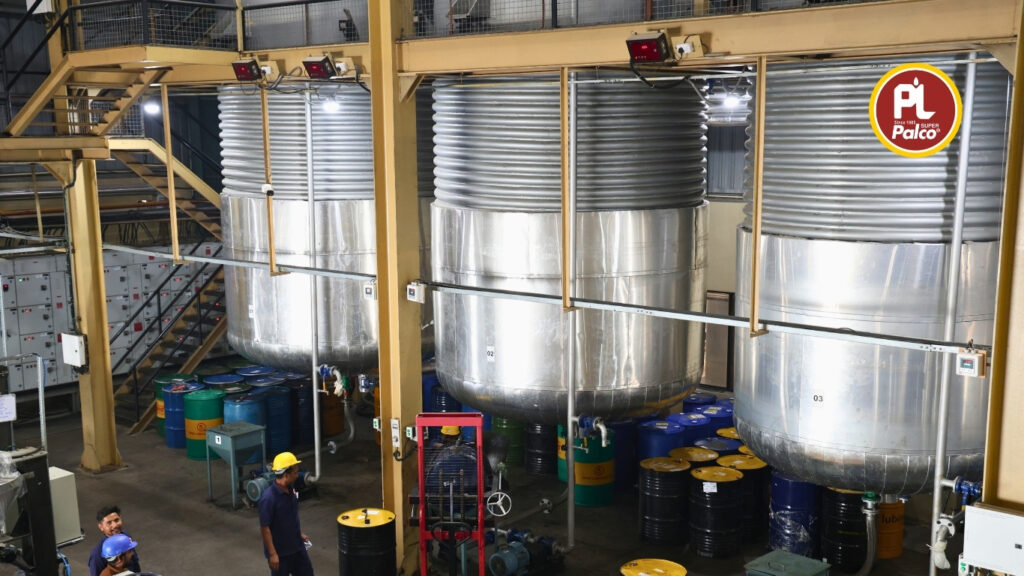
Then there is the factory floor itself. Blending plants consume energy, manage heat-intensive processes, and handle chemical storage. Operational efficiency, energy optimization, and structured process control are not just cost-saving measures. They increasingly reflect environmental discipline.
In practical terms, ESG on the environmental side often looks like better operations.
The Social Layer: Often Overlooked, Increasingly Critical
Lubricant manufacturing is not glamorous. The social aspect of ESG in lubricant industry is often underestimated but plays a critical role in long-term sustainability. It involves chemicals, machinery, logistics, and ground-level dealer networks. Safety and responsibility therefore cannot be assumed; they must be designed into the system.
Worker safety in blending plants is foundational. Proper storage, training, PPE compliance, and emergency response systems are basic expectations. Companies that treat safety as documentation rather than culture tend to struggle in the long run.
The dealer and distributor ecosystem is equally important. The lubricant business runs on trust and long credit cycles. Ethical practices, transparent schemes, and fair communication define reputation in the market. ESG in this context means structured relationships, not opportunistic expansion.
There is also a community dimension. Manufacturing facilities operate within local ecosystems. Skill development, employment generation, and responsible engagement shape how a company is perceived over decades.
These elements may not appear in product brochures. But they influence brand strength far more than short-term campaigns.
Governance: The Quiet Differentiator
In many ways, governance is where ESG becomes tangible.
Lubricant companies deal with pollution control norms, taxation compliance, quality certifications, export documentation, and OEM audits. Strong internal systems are no longer optional.
Batch traceability, lab testing protocols, ISO certifications, documented SOPs, and disciplined financial reporting create credibility. In B2B relationships, especially with industrial buyers and institutional clients, governance standards can determine whether partnerships are renewed or replaced.
Supply chains are also under scrutiny. Vendor reliability, ethical sourcing, and payment discipline form part of governance evaluation. A weak supply chain today can quickly become a reputational issue tomorrow.
For companies that plan long term, governance is not a compliance burden. It is a stabilizer.
From Compliance Requirement to Competitive Edge
What is changing now is not the existence of ESG expectations, but their weight in decision-making.
OEMs and large industrial buyers are quietly incorporating ESG filters into vendor evaluations. Financial institutions look more closely at governance structures. Export markets demand documentation that was rarely asked for a decade ago.
This means ESG is slowly shifting from being a cost center to becoming a competitive advantage.
Companies that operate with discipline often discover that structured processes reduce waste, improve efficiency, and strengthen client confidence. Over time, that translates into stronger positioning.
At Paras Lubricants Limited – Palco, conversations around responsible manufacturing, compliance clarity, and structured operations have gradually evolved into long-term alignment with these expectations. Not because ESG became fashionable, but because operational maturity demands it.
The lubricant industry has always been performance-driven. What ESG adds is another dimension of accountability.
The Road Ahead for Lubricant Manufacturers
The lubricant industry is already navigating EV growth, tighter emission norms, volatile crude-linked input costs, and rising global competition. ESG adds another dimension to this complexity.
Yet it should not be viewed purely as pressure.
When approached strategically, ESG encourages better sourcing decisions, safer plants, stronger dealer ecosystems, and more reliable governance frameworks. Over time, these factors translate into resilience.
Lubricants enable engines, machines, and industries to function smoothly. The companies that manufacture them must now ensure their own systems run with equal precision and accountability.
ESG will not redefine the lubricant industry overnight. However, it will increasingly separate reactive companies from those built for long-term relevance and high-performance lubricants. In a sector defined by durability and trust, that distinction may prove more important than ever.